
A little reading, every day
Free English Books in PDF & EPUB
Read and download free English ebooks, from A1 picture stories to unabridged classics. Browse by English level, topic or format and keep the PDF, EPUB or TXT file.
English only
EPUB & PDF downloads
No account needed
A reading journey
Series & Collections
Follow connected stories in order, or find a collection and choose where to begin.
For young readers
Kids Books
Discover stories selected for children, for reading together or exploring independently.
Saved on this browser only. Book availability may change. 3,949 books One animal sneezes, and then another, and another! This funny read-aloud will remind kids to COVER YOUR SNEEZE! the way the teacher or parent demonstrates. Find out about an unique cow. PDF · Fixed page layoutIllustrations: not assessed Categories: Family & Friends Nature/Gardening/Animals Collection: Editor’s Picks Readers: Kids Suggested age: Not assessed "Cow-Country" by B. M. Bower is a novel likely written during the early 20th century, evoking themes of adventure and the frontier lifestyle. The story revolves around the Birnie family, particularly focusing on Buddy, an energetic young boy longing for action and adventure against the backdrop of a cattle drive across the Staked Plains. The opening of the novel introduces Buddy and his family as they journey with a herd of cattle. The scene is set in the hot afternoon, capturing the challenges of a long drive, where exhausted oxen struggle to pull the wagon. Through Buddy's restless demeanor, we see his strong desire for exploration, leading him away from the safety of the wagon toward encounters with wildlife, such as a horned toad and a rattlesnake. As the narrative unfolds, it showcases Buddy's innate courage and curiosity, even as his adventurous spirit often places him in precarious situations. The opening portion effectively establishes Buddy's character and the novel’s frontier theme, setting the stage for his formative experiences in the cow-country. A crab searches the beach for somewhere to shelter from the sun, but he encounters problems when he cannot find anything to use as a shelter. A mother and baby crab walk the beach together, searching for items to help build their new town. PDF · Fixed page layoutIllustrations: not assessed Categories: Adventure Children & Young Adult Reading Crime, Thrillers & Mystery Family & Friends Fiction Science & Nature Readers: Kids Suggested age: Not assessed What do 19th Century English mathematician Ada Lovelace, new-age fashion designer Anouk Wipprecht, and the current Digital Minister of Taiwan Audrey Tang have in common? They’ve all impacted the way we look at computers and coding. This book introduces some inspiring women from the world of technology, from across a century. PDF · Fixed page layoutIllustrations: not assessed Categories: Biographies Engineering & Technology History Mathematics Science & Nature Collection: Editor’s Picks Readers: Kids Suggested age: Not assessed "Cranford" by Elizabeth Cleghorn Gaskell is an episodic novel published in 1853. Set in a small English country town, the work affectionately portrays a society of elderly women navigating genteel poverty and rigid social codes in a world slowly changing around them. Through the eyes of visitor Mary Smith, readers encounter the "Amazons" of Cranford—widows and spinsters maintaining appearances through "elegant economy" while resisting the industrial age creeping beyond their boundaries. This gentle chronicle explores class, tradition, and the gradual shift from rank-based society toward human kindness. "Cratylus" by Plato is a dialogue written during Plato's middle period. Two men ask Socrates whether names are conventional or natural—whether language consists of arbitrary signs or words have intrinsic connections to what they signify. Through extensive etymological exploration, Socrates examines the origins of divine names and abstract concepts, testing theories about how language captures reality. The dialogue probes fundamental questions about meaning, communication, and whether studying words can lead to philosophical truth about the nature of things themselves. Ever wondered what the planet was like millions of years ago? What kind of creatures roamed the Earth? What trees grew in the prehistoric forests? Well, there is a way to find out—through palaeontology, a special science that is all about digging up and unscrambling clues to the past. "Creatures That Once Were Men" by Maksim Gorky is a work of fiction written during the late 19th century. The book offers a poignant exploration of the lives of the downtrodden in society, focusing on themes of poverty, desperation, and the remnants of humanity within those who have suffered great loss. The narrative centers around Aristid Kuvalda, a captain who runs a dosshouse inhabited by various destitute characters, each with their own backstories that reflect the struggles of the lower class. At the start of the story, the setting is vividly described, showcasing a dismal street filled with decaying huts and a dilapidated dosshouse run by Kuvalda. The opening introduces the captain and his unique personality—boisterous and somewhat cynical, yet possessing a certain camaraderie with his lodgers. As he interacts with the "creatures that once were men," their stories unfold, revealing their pasts filled with work, loss, and a desperate search for solace amidst their harsh realities. The atmosphere is heavy, reflecting the bleakness of their existence, yet threaded with moments of humor and philosophical musings about life, survival, and dignity despite their tragic circumstances. This opening sets the stage for a powerful examination of human resilience and social critique that is likely to resonate with readers interested in profound character studies and societal reflections. The average square foot of ground beneath your feet is home to quite a few characters, who have an important role to play in the larger scheme of things. Can you spot them? "Criminal Psychology: A Manual for Judges, Practitioners, and Students" by Hans Gross is a scientific publication likely written in the early 20th century. The book serves as a comprehensive guide on the psychological aspects of criminal behavior and the judicial process, focusing on the mental states of judges, witnesses, jurors, and offenders to enhance the understanding of crime and its implications for justice. The opening of the work establishes the importance of applying psychology to the field of criminal law, arguing that understanding human behavior, perception, and the influences on testimony are crucial for effective legal proceedings. Gross outlines the critical role of judges in discerning truth from witness testimony and delves into the complexities of psychological conditions that can affect evidence gathering and interpretation. He emphasizes the need for judges to be aware of the psychological traits influencing both witnesses and criminals, which serves as a foundation for the discussions that follow throughout the text. EPUB · Layout not assessedIllustrations: not assessed Categories: Law & Criminology Psychiatry/Psychology Readers: Adults Suggested age: 16+ (AI estimate) Suggested age, readers, English difficulty and US school grade are separate labels. Age groups are guidance based on source information or editorial review; unreviewed books are “Not assessed”. A US grade is assigned only with source information or a documented assessment; otherwise it is “Not assessed”. Levels use A1–C2 to indicate reading difficulty. StoryWeaver levels 1/2/3/4 use our approximate A1/A2/B1/B2 guide, labelled “estimated”; this is not an official equivalence. A book-specific assessment takes priority. Other unassessed books are labelled “Not assessed”. Source StoryWeaver levels are retained separately. Classics retain their original English.
Want to read
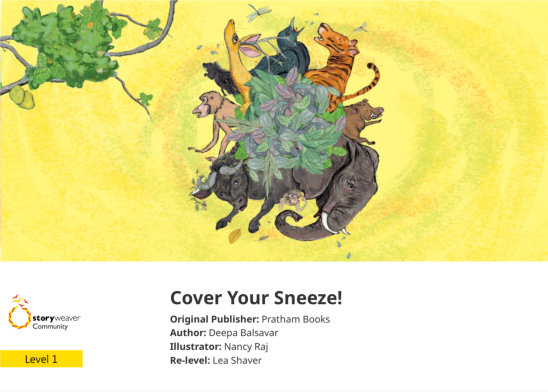
Cover Your Sneeze!
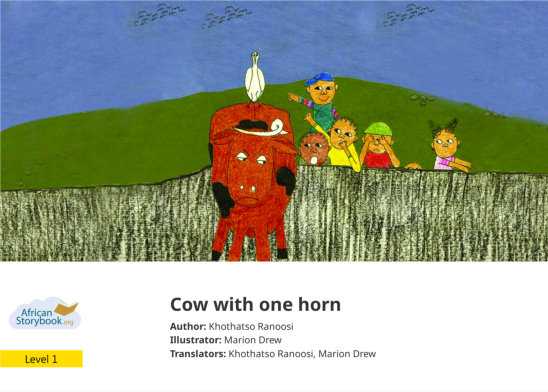
Cow with one horn
Cow-Country
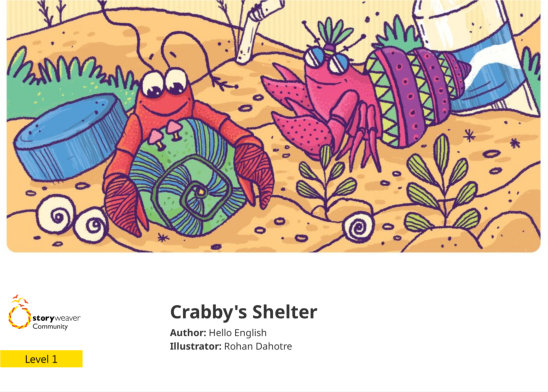
Crabby’s Shelter
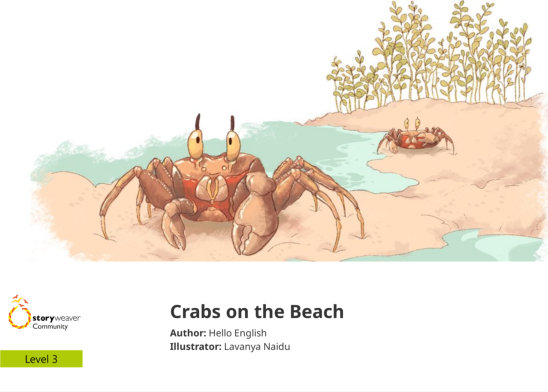
Crabs on the Beach
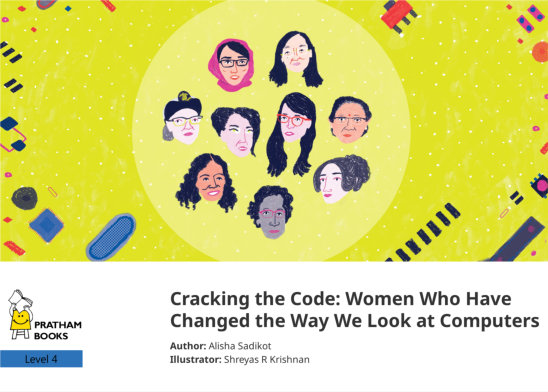
Cracking the Code: Women Who Have Changed the Way We Look at Computers
Cranford
Cratylus
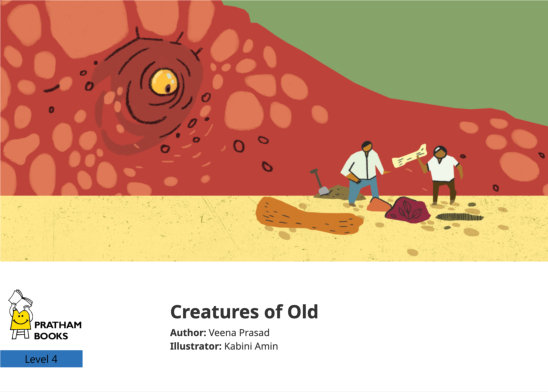
Creatures of Old
Creatures That Once Were Men
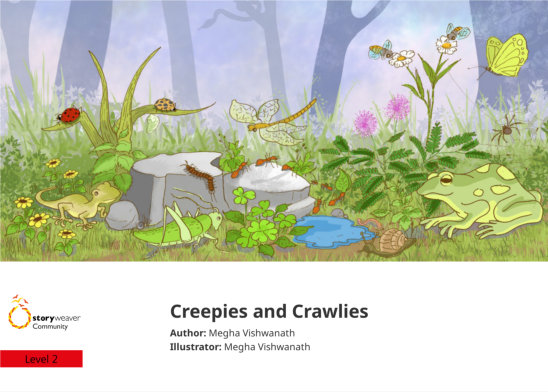
Creepies and Crawlies
Criminal Psychology: A Manual for Judges, Practitioners, and Students
From a free ebook to your next reading habit.
These illustrated stories were created for children. Their short chapters and visual clues can also help English learners find an approachable place to start.
- Choose a story and download its PDF.
- Read it in your usual PDF reader, or save it to Files on your phone.
- In English Book Reader AI & Learn, open the import menu, choose Choose a PDF and select the saved file. You can then read, listen and explore English in context.
PDF downloads are free. App features and paid options are separate. Explore the app.
Shared with permission, credited with care.
This library includes openly licensed StoryWeaver stories and reviewed public-domain classics. Each book page explains its source, credits and reuse terms. Public-domain status depends on the country and exact edition. CC BY books require appropriate credit, the license link and an indication of changes.
Author, illustrator, publisher and original credits appear on each book page and inside the PDF. PDF formatting or safety changes are described on the book page. These books remain governed by their own license; app subscription terms do not restrict those rights. English Book Reader is an independent collection, with no endorsement by the original creators or StoryWeaver implied.
Have a question about a book or its credits? Contact us.