Library · Book category

Russian Literature Books

Browse English books in Russian Literature. Age guidance and English difficulty are assessed separately.

Advanced filters
Anna Karenina — typographic cover

Level C1 · pages · English

Anna Karenina

Written by Tolstoy, Leo, graf

"Anna Karenina" by graf Leo Tolstoy is a novel first published in book form in 1878. The story follows Anna, a married socialite in Imperial Russian society, whose extramarital affair with cavalry officer Count Vronsky scandalizes Saint Petersburg and forces them to flee to Italy. A parallel narrative traces landowner Konstantin Levin's pursuit of marriage and his struggles with faith and estate management. The novel explores themes of betrayal, family, marriage, desire, and the clash between rural and urban life against Russia's rapid social transformation.

Explore book
Beauty and the Beast, and Tales of Home — typographic cover

Level C1 · pages · English

Beauty and the Beast, and Tales of Home

Written by Taylor, Bayard

"Beauty and the Beast" by Bayard Taylor is a novel that intertwines fact and fancy, presenting a narrative set in mid-19th century Russia. The story engages with themes of love, power dynamics, and societal customs, focused on the characters of Prince Alexis, his wife Princess Martha, and their son Prince Boris. It explores the complexities of their lives within the context of Russian nobility and serfdom, revealing the interpersonal struggles and emotions that shape their world. The opening portion introduces us to Kinesma, a town on the Volga, where Prince Alexis finds himself in turmoil over a postponed dinner. His comedic insistence on avoiding a festival for his son leads to a series of events involving a drunken bear and a harried court-poet, setting the stage for the whimsical yet dark environment of the castle. As the narrative unfolds, we witness the egocentric behaviors of Alexis, the meekness of Princess Martha, and the cowardly nature of Boris, all richly painted against the backdrop of Russian culture and humor. The tone oscillates between severe brutality and lighthearted farce, foreshadowing the transformations that will occur as their lives progress.

Explore book
Creatures That Once Were Men — typographic cover

Level C1 · pages · English

Creatures That Once Were Men

Written by Gorky, Maksim

"Creatures That Once Were Men" by Maksim Gorky is a work of fiction written during the late 19th century. The book offers a poignant exploration of the lives of the downtrodden in society, focusing on themes of poverty, desperation, and the remnants of humanity within those who have suffered great loss. The narrative centers around Aristid Kuvalda, a captain who runs a dosshouse inhabited by various destitute characters, each with their own backstories that reflect the struggles of the lower class. At the start of the story, the setting is vividly described, showcasing a dismal street filled with decaying huts and a dilapidated dosshouse run by Kuvalda. The opening introduces the captain and his unique personality—boisterous and somewhat cynical, yet possessing a certain camaraderie with his lodgers. As he interacts with the "creatures that once were men," their stories unfold, revealing their pasts filled with work, loss, and a desperate search for solace amidst their harsh realities. The atmosphere is heavy, reflecting the bleakness of their existence, yet threaded with moments of humor and philosophical musings about life, survival, and dignity despite their tragic circumstances. This opening sets the stage for a powerful examination of human resilience and social critique that is likely to resonate with readers interested in profound character studies and societal reflections.

Explore book
Father Sergius — typographic cover

Level C1 · pages · English

Father Sergius

Written by Tolstoy, Leo, graf

"Father Sergius" by graf Leo Tolstoy is a short story written between 1890 and 1898. After discovering his fiancée's affair with the Tsar, proud Prince Stepan Kasatsky abandons his promising future to become a monk. Despite years of spiritual devotion and growing fame as a holy hermit and healer, he struggles with inner weakness, pride, and desire. His journey takes him from self-mutilation to resist temptation, through devastating failure, and finally toward an unexpected path of humble service and redemption.

Explore book
Ivanoff: A Play — typographic cover

Level C1 · pages · English

Ivanoff: A Play

Written by Chekhov, Anton Pavlovich

"Ivanoff: A Play" by Anton Pavlovich Chekhov is a four-act drama first performed in 1887. Nikolai Ivanov, a debt-ridden government official, struggles with melancholy as his marriage crumbles and his tuberculosis-stricken wife unknowingly approaches death. When he becomes entangled with Sasha, his creditor's young daughter, a web of accusations about his motives begins to tighten. Chekhov's drama explores internal conflicts and moral judgment, building toward a shocking climax that questions whether redemption is possible for a man who has lost his appetite for life.

Explore book
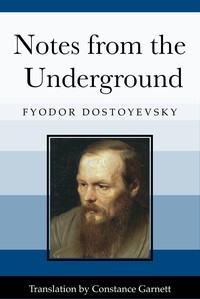
Notes from the Underground — typographic cover

Level C1 · pages · English

Notes from the Underground

Written by Dostoyevsky, Fyodor

"Notes from the Underground" by Fyodor Dostoevsky is a novella published in 1864. This confession-style narrative follows a bitter, isolated former civil servant in St. Petersburg known as the Underground Man. Through philosophical monologues and personal anecdotes, he attacks determinism and utopian ideals, arguing that humans need suffering and irrationality to maintain freedom. He obsesses over past humiliations and social encounters, embracing spite and inaction while despising the rational self-interest that he believes has trapped him in unhappiness.

Explore book
Swan Song — typographic cover

Level C1 · pages · English

Swan Song

Written by Chekhov, Anton Pavlovich

"Swan Song" by Anton Pavlovich Chekhov is a one-act play written during the late 19th century, specifically in the transitional period of Russian literature. This poignant work delves into themes of aging, loneliness, and the existential weight of a life spent in the pursuit of artistic acclaim, encapsulating the struggles of an aging actor coming to terms with his past and his mortality. Chekhov, celebrated for his insight into the human condition, weaves a narrative that portrays the melancholy yet humorous reality of a life spent on stage. The play centers around Vasili Svetlovidoff, a 68-year-old comedian who finds himself alone in an empty theater after a performance dedicated to him. As he reflects on his life, he is consumed by feelings of regret and nostalgia, recalling his youthful exuberance and past artistic successes. Joined by Nikita Ivanitch, an old prompter, Svetlovidoff's melancholic musings shift between moments of revelry and despair, revealing his isolation and the fleeting nature of fame. Through their interactions, the play contrasts the vibrancy of the actor's once-celebrated talent with the stark realities of aging and forgotten glory, ultimately leaving audiences to ponder life's transitory nature and the quest for meaningful connections amidst the ravages of time.

Explore book
The forged coupon, and other stories — typographic cover

Level B2 · pages · English

The forged coupon, and other stories

Written by Tolstoy, Leo, graf

"The forged coupon, and other stories" by graf Leo Tolstoy is a collection written between 1902-1904 and published in 1910. The title novella follows a schoolboy's desperate act of forging a bond coupon to repay a debt. This single deception triggers a devastating chain reaction, touching dozens of lives and ultimately leading to murder. The story explores how one evil deed ripples outward, yet maintains hope by showing that good works can spread just as powerfully as wrongdoing through society.

Explore book
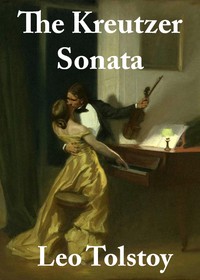
The Kreutzer Sonata and Other Stories — typographic cover

Level C1 · pages · English

The Kreutzer Sonata and Other Stories

Written by Tolstoy, Leo, graf

"The Kreutzer Sonata and Other Stories" by Leo Tolstoy is a collection of narratives written during the late 19th century. The titular story, "The Kreutzer Sonata," presents a dialogue that dives deep into themes of love, marriage, and morality, primarily through the experiences and musings of the character Posdnicheff, who reveals his tumultuous relationship with his wife. This collection not only explores individual tales but also reflects Tolstoy's profound philosophical and social critiques of the institution of marriage and the complexities of human relationships. At the start of "The Kreutzer Sonata," the protagonist is introduced during a train journey, where various passengers engage in an intense conversation about love and marriage. The atmosphere is charged with differing opinions, particularly between a loquacious lawyer and a cynical merchant, who assert traditional views on gender roles within marriage. The somber undertone of Posdnicheff’s initial silence hints at his troubled past and foreshadows a harrowing tale of jealousy, betrayal, and existential despair. As conversations unfold, they lead to disturbing revelations about marital discontent, which become the basis for Posdnicheff’s own tragic narrative about love and its disillusionment. This opening effectively sets the stage for a deeper exploration of Tolstoy's stark observations on human emotions and societal expectations.

Explore book
The schoolmistress, and other stories — typographic cover

Level C1 · pages · English

The schoolmistress, and other stories

Written by Chekhov, Anton Pavlovich

"The Schoolmistress and Other Stories" by Anton Pavlovich Chekhov is a collection of short stories written in the late 19th century. The stories delve into the complexities of human emotions and social situations, often exploring themes of loneliness, love, and societal constraints. In the opening tale, "The Schoolmistress," the narrative follows Marya Vassilyevna, a weary schoolteacher, as she reflects on her mundane life and internal struggles on a journey back to her village. At the start of "The Schoolmistress," readers are introduced to Marya Vassilyevna, who is returning home after collecting her salary. As she travels along a familiar road, Chekhov captures her sense of monotony and discontentment, overshadowed by the memories of her past life that she struggles to recall. The story paints a vivid picture of her surroundings while also hinting at her longing for connections and the beauty that life offers, yet remains just out of reach. As she encounters Hanov, a local landowner with an alluring charm, Marya contemplates the absurdity of her own life in comparison to his, intensifying her inner conflict. This opening sets the stage for a poignant exploration of her unfulfilled desires and the harsh realities of her existence.

Explore book
The sea-gull — typographic cover

Level C1 · pages · English

The sea-gull

Written by Chekhov, Anton Pavlovich

"The Sea-Gull" by Anton Pavlovich Chekhov is a play written in 1895. Four characters clash over art and love at a country estate: a fading actress, her aspiring playwright son, a famous writer, and a young woman who dreams of the stage. Romantic entanglements intertwine with artistic ambitions as characters speak in subtext rather than direct declarations. The opening night in 1896 was a notorious disaster, but a later production became a triumph that transformed Russian theatre forever.

Explore book
Uncle Vanya: Scenes from Country Life in Four Acts — typographic cover

Level B2 · pages · English

Uncle Vanya: Scenes from Country Life in Four Acts

Written by Chekhov, Anton Pavlovich

"Uncle Vanya: Scenes from Country Life in Four Acts" by Anton Pavlovich Chekhov is a play first published in 1897. When an elderly professor and his beautiful young wife visit a rural estate, two men fall under her spell while confronting their provincial disappointments. The estate manager Vanya has sacrificed years supporting the professor's career, while his niece Sonya harbors unspoken feelings for the local doctor. Crisis erupts when the professor announces plans to sell the estate—their home—threatening to upend their carefully managed existence.

Explore book

Suggested age, readers, English difficulty and US school grade are separate labels. Age groups are guidance based on source information or editorial review; unreviewed books are “Not assessed”. A US grade is assigned only with source information or a documented assessment; otherwise it is “Not assessed”. Levels use A1–C2 to indicate reading difficulty. StoryWeaver levels 1/2/3/4 use our approximate A1/A2/B1/B2 guide, labelled “estimated”; this is not an official equivalence. A book-specific assessment takes priority. Other unassessed books are labelled “Not assessed”. Source StoryWeaver levels are retained separately. Classics retain their original English.

App tour

Captured app screens · English Book Reader AI & Learn

App screen

If you own rights to material on this website, or are authorized to represent the owner, send the details below. We review notices and can restrict or remove access. For follow-up or a counter-notice, include your reference or email [email protected].