
A little reading, every day
Free English Books in PDF & EPUB
Read and download free English ebooks, from A1 picture stories to unabridged classics. Browse by English level, topic or format and keep the PDF, EPUB or TXT file.
English only
EPUB & PDF downloads
No account needed
A reading journey
Series & Collections
Follow connected stories in order, or find a collection and choose where to begin.
For young readers
Kids Books
Discover stories selected for children, for reading together or exploring independently.
Saved on this browser only. Book availability may change. 3,949 books "The Scholemaster" by Roger Ascham is a historical treatise on education written during the late 16th century. The book discusses the principles and methodologies of teaching Latin, primarily aimed at educating young gentlemen and noble youths in a private setting. Ascham emphasizes the importance of proper pedagogy, advocating for a nurturing and encouraging approach to learning rather than one based on fear and punishment. At the start of "The Scholemaster," the author presents a narrative framework in which he recalls a significant discussion among prominent scholars and advisors during a royal dinner at Queen Elizabeth I's court. Through their conversation, Ascham articulates the belief that harsh disciplinary methods often lead children to despise learning. He reflects on his own educational experiences and explores the characteristics of effective teachers and students, arguing for a learning environment that fosters love for knowledge over fear of punishment. This opening sets the stage for his elaborate exploration of teaching methods throughout the text. EPUB · Layout not assessedPDF · Fixed page layoutIllustrations: not assessed Categories: History - Early Modern (c. 1450-1750) Teaching & Education Readers: Adults Suggested age: 16+ (AI estimate) "The School for Scandal" by Richard Brinsley Sheridan is a comedy of manners first performed in 1777. In fashionable London society, gossip-mongers spread malicious rumors while hidden motives and false reputations abound. Two brothers compete for the same heiress, though one is deemed respectable while the other is considered a wastrel. Meanwhile, their wealthy uncle returns from abroad in disguise to test their true characters. Marriages strain, scandals brew, and nothing is quite as it seems in this world of wit and deception. One weekend, Teddy Bear, Ducky, and Fish go to the hill behind their school to roast some sweet potatoes. But suddenly, a strong wind comes and their fire spreads to the bushes. Soon, their school is on fire! What will the three friends do? "The Schoolmistress and Other Stories" by Anton Pavlovich Chekhov is a collection of short stories written in the late 19th century. The stories delve into the complexities of human emotions and social situations, often exploring themes of loneliness, love, and societal constraints. In the opening tale, "The Schoolmistress," the narrative follows Marya Vassilyevna, a weary schoolteacher, as she reflects on her mundane life and internal struggles on a journey back to her village. At the start of "The Schoolmistress," readers are introduced to Marya Vassilyevna, who is returning home after collecting her salary. As she travels along a familiar road, Chekhov captures her sense of monotony and discontentment, overshadowed by the memories of her past life that she struggles to recall. The story paints a vivid picture of her surroundings while also hinting at her longing for connections and the beauty that life offers, yet remains just out of reach. As she encounters Hanov, a local landowner with an alluring charm, Marya contemplates the absurdity of her own life in comparison to his, intensifying her inner conflict. This opening sets the stage for a poignant exploration of her unfulfilled desires and the harsh realities of her existence. Class IV is visiting the science complex today. Join them on their journey through the different science labs. Remember to keep an eye out for the six naughty children! PDF · Fixed page layoutIllustrations: not assessed Categories: Children & Young Adult Reading Engineering & Technology Fiction Humor School & Education Science & Nature Collection: Editor’s Picks Readers: Kids Suggested age: Not assessed "The Scientific Monthly, October to December, 1915" edited by J. McKeen Cattell is a scientific publication compiled in the early 20th century. The volume includes various articles discussing topics such as astronomy, natural science, and social issues, reflecting the era's growing interest in scientific discovery and technological advancement. The beginning of this volume introduces several in-depth articles, most notably, “The Evolution of the Stars and the Formation of the Earth” by Dr. William Wallace Campbell, who explores the principles of spectroscopy to analyze the stellar universe. He explains how this scientific method allows astronomers to deduce the chemical compositions of stars, illustrating his points with comparisons and examples from celestial phenomena. Another article provides insight into Fijian society, discussing its intricate social structures and cultural practices, emphasizing the differences between their communal lifestyle and Western individualism. This opening portion sets the stage for a rich exploration of scientific thought and cultural observations relevant to the time. "The Sea-Gull" by Anton Pavlovich Chekhov is a play written in 1895. Four characters clash over art and love at a country estate: a fading actress, her aspiring playwright son, a famous writer, and a young woman who dreams of the stage. Romantic entanglements intertwine with artistic ambitions as characters speak in subtext rather than direct declarations. The opening night in 1896 was a notorious disaster, but a later production became a triumph that transformed Russian theatre forever. "The Sea-Wolf" by Jack London is a psychological adventure novel published in 1904. Literary critic Humphrey Van Weyden survives a shipwreck only to be rescued by Wolf Larsen, a brutal yet brilliant sea captain who forces him into servitude aboard a seal-hunting schooner. The soft intellectual must learn to survive among a violent crew while confronting Larsen's nihilistic philosophy and physical dominance. When a young woman is rescued at sea, Van Weyden faces new challenges protecting her from both the merciless captain and the harsh realities of life at sea. The Second Stain by Arthur Conan Doyle. Source reading level: B1+ Intermediate. "The Second Thoughts of an Idle Fellow" by Jerome K. Jerome is a humorous collection of essays written in the late 19th century. This work reflects on the absurdities and challenges of daily life, touching on themes of indecision and the human experience through a blend of comedy and philosophical musings. The essays typically employ a conversational style, allowing readers to engage intimately with the thoughts of the narrator, who seems to embody an everyman perspective on life's trivialities. The opening of the book presents a lively, comedic dialogue centered around a woman's indecision while shopping for fabric. It illustrates her struggles in making a choice between a grey and a red material, which reflects larger themes of human indecisiveness and societal pressures regarding appearances. The narrator humorously interjects with thoughts on male indecision, questioning the evolving standards of masculinity and fashion, and hinting at the absurdity of worrying too much about superficial concerns. This set-up establishes the tone of the collection—a blend of everyday observations infused with wit and introspection that invites the reader to reflect on their own experiences with indecision and societal expectations. The Second Voyage of Sindbad the Sailor by Victoria Bradshaw. Source reading level: A2 Elementary. The Secret Agent by Joseph Conrad. Source reading level: B1 Pre-Intermediate. Suggested age, readers, English difficulty and US school grade are separate labels. Age groups are guidance based on source information or editorial review; unreviewed books are “Not assessed”. A US grade is assigned only with source information or a documented assessment; otherwise it is “Not assessed”. Levels use A1–C2 to indicate reading difficulty. StoryWeaver levels 1/2/3/4 use our approximate A1/A2/B1/B2 guide, labelled “estimated”; this is not an official equivalence. A book-specific assessment takes priority. Other unassessed books are labelled “Not assessed”. Source StoryWeaver levels are retained separately. Classics retain their original English.
Want to read
The Scholemaster
The School for Scandal
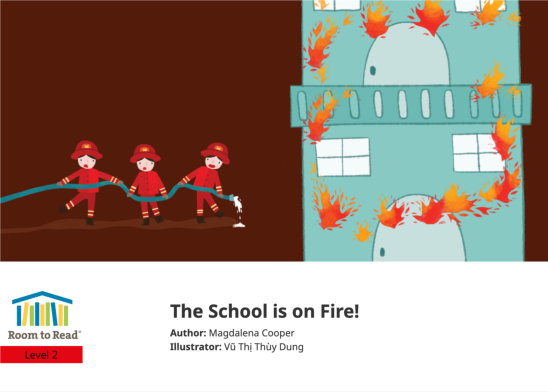
The School is on Fire!
The schoolmistress, and other stories
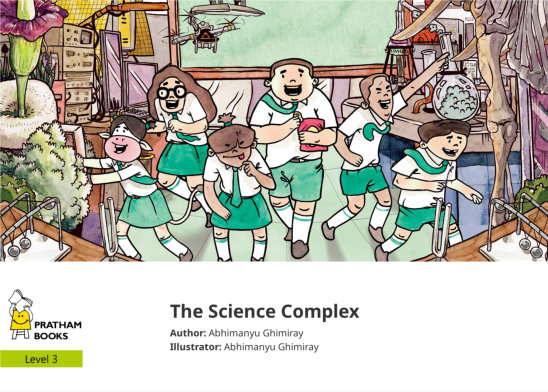
The Science Complex
The Scientific Monthly, October to December, 1915
The sea-gull
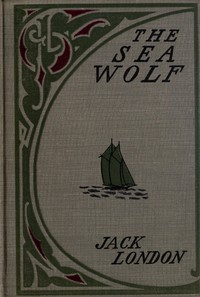
The Sea-Wolf
The Second Stain
The Second Thoughts of an Idle Fellow
The Second Voyage of Sindbad the Sailor
The Secret Agent
From a free ebook to your next reading habit.
These illustrated stories were created for children. Their short chapters and visual clues can also help English learners find an approachable place to start.
- Choose a story and download its PDF.
- Read it in your usual PDF reader, or save it to Files on your phone.
- In English Book Reader AI & Learn, open the import menu, choose Choose a PDF and select the saved file. You can then read, listen and explore English in context.
PDF downloads are free. App features and paid options are separate. Explore the app.
Shared with permission, credited with care.
This library includes openly licensed StoryWeaver stories and reviewed public-domain classics. Each book page explains its source, credits and reuse terms. Public-domain status depends on the country and exact edition. CC BY books require appropriate credit, the license link and an indication of changes.
Author, illustrator, publisher and original credits appear on each book page and inside the PDF. PDF formatting or safety changes are described on the book page. These books remain governed by their own license; app subscription terms do not restrict those rights. English Book Reader is an independent collection, with no endorsement by the original creators or StoryWeaver implied.
Have a question about a book or its credits? Contact us.