Saving a word is a beginning, not the end of learning it. You may recognize it while reading today and hesitate when you meet it next week. Spaced repetition organizes return visits to saved material instead of asking you to review every card equally often. It works best as part of a reading habit that gives those cards meaning.
Start with a small, useful deck
Choose words you understand in their original passage and expect to encounter again. A large deck of unfamiliar entries can quickly become a queue you do not want to open. It is reasonable to read a chapter and save only a few expressions from it.
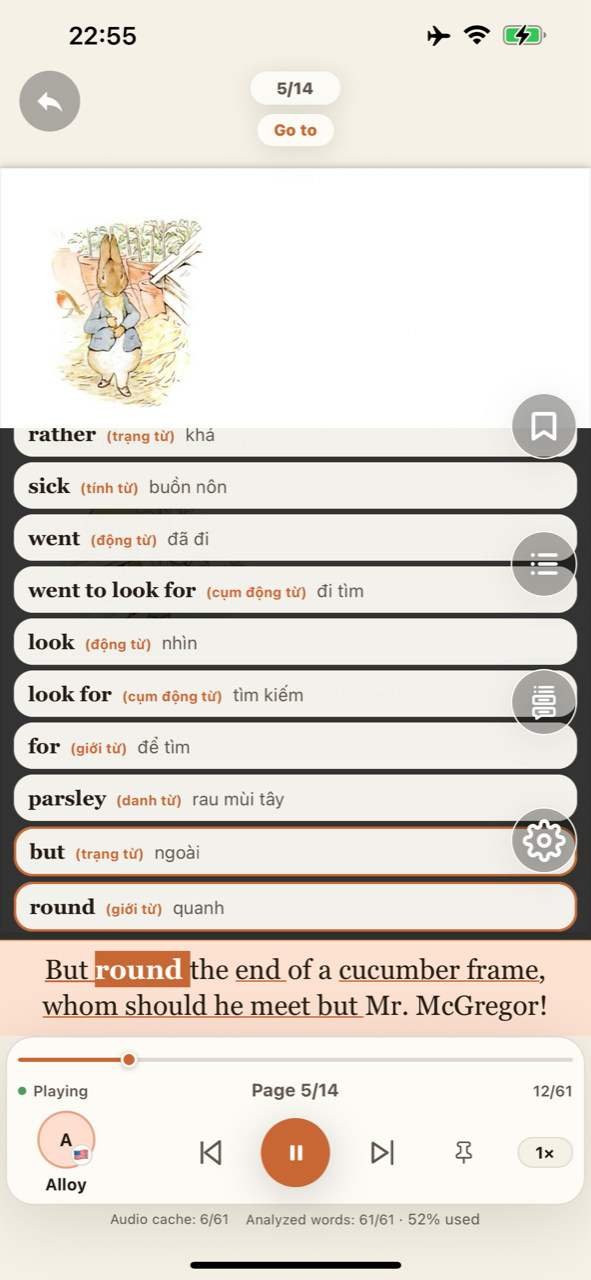
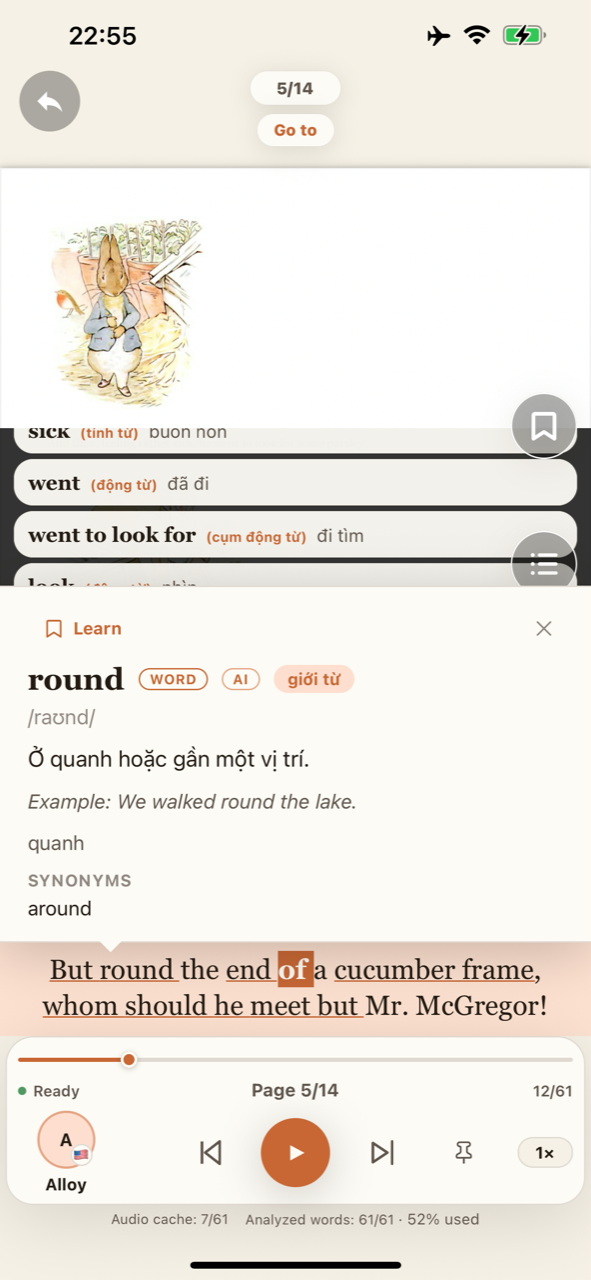
In English Book Reader, saved cards can hold words, expressions and grammar points with their source sentences. Before adding one, ask what you want to remember: a particular meaning, a phrase pattern or the way a sentence is built.
Make the question specific
A card should ask something you can answer. A word with five translations and three unrelated examples makes the target unclear. Focus on one useful sense first. You can add another encounter later if the same word appears with a different meaning.
A sentence with a gap can give your memory a useful prompt. When that becomes familiar, try recalling the expression with less support. The app offers practice that develops from recognition and sentence completion toward recall, listening and spelling.
Try to recall before checking
When a review appears, give yourself a moment to produce an answer before looking at it. The answer might be the meaning, the missing phrase or the spelling of something you heard. A pause is normal. You are using the card to find out what is available in memory today.
If you need help, return to the source sentence and read it aloud or listen again. Do not pretend a card was easy when it was not. An honest review gives the schedule more useful information than racing through the deck.
Keep review compatible with ordinary days
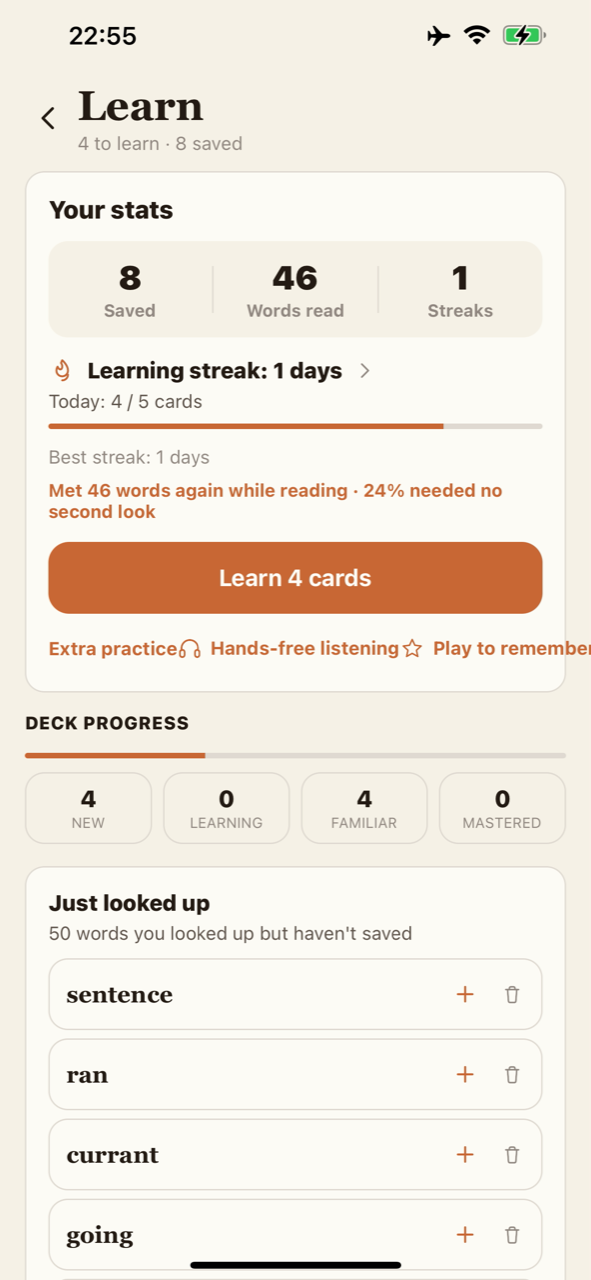
Set a daily goal you can usually fit into your routine. A few cards after a reading session may be easier to sustain than a separate long study block. If a queue starts feeling heavy, reduce the number of new cards you save while continuing to review the ones already there.
A streak can be encouraging, but it is only one view of your practice. Missing a day does not erase what you have learned. Use the progress information to adjust the routine rather than making the routine serve the number.
Let your books provide the next encounter
After review, return to the story or document. Seeing a saved word again in a real passage gives you a different kind of question: can you understand it here, with these surrounding words? Keep an eye out for variations in meaning and expression.
You can also use hands-free rounds when looking at the screen is inconvenient, or a learning game for another kind of encounter. Explore the practice features, and read about building vocabulary cards with context before filling a new deck.
Bring the words into your reading.
Explore reading, on-device listening and AI English learning in one app.
Explore the app