Library · Book category

History - Medieval/Middle Ages Books

Browse English books in History - Medieval/Middle Ages. Age guidance and English difficulty are assessed separately.

Advanced filters
History of the Conflict Between Religion and Science — typographic cover

Level C1 · pages · English

History of the Conflict Between Religion and Science

Written by Draper, John William

"History of the Conflict Between Religion and Science" by John William Draper is a historical account written in the late 19th century. The work explores the ongoing struggle between religious beliefs and scientific thought throughout history, tracing the roots of this conflict back to ancient civilizations and the rise of modern science. Draper argues that the battle between these two spheres is a significant and pressing issue that impacts societal norms, governance, and the pursuit of knowledge. The opening of this text sets the stage for Draper’s analysis by discussing the mental state of the educated classes in Europe and America, who are increasingly moving away from traditional religious beliefs. He emphasizes the historical tension and antagonism between religious dogma, particularly as represented by the Catholic Church, and the advancements of science, which often challenge these beliefs. Draper presents the conflict as not only historical but also a present-day issue, suggesting that the role of religion in society needs to be examined in light of scientific progress. By laying this groundwork, Draper prepares readers for a detailed examination of pivotal moments in history where science and religion clashed, and he hints at the profound implications this conflict has for humanity’s understanding of truth and existence.
Explore book
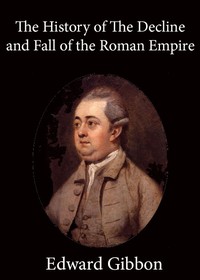
History of the Decline and Fall of the Roman Empire — Volume 4 — typographic cover

Level C2 · pages · English

History of the Decline and Fall of the Roman Empire — Volume 4

Written by Gibbon, Edward

"History of the Decline and Fall of the Roman Empire — Volume 4" by Edward Gibbon is part of a six-volume work published between 1776 and 1788. This monumental history traces the Roman Empire from its peak through fifteen centuries of transformation, examining the rise of Christianity, the fall of Rome, and the eventual collapse of Byzantium. Gibbon's controversial thesis attributes Rome's decline partly to Christianity's influence on civic virtue. Written with detached yet critical prose, this Enlightenment masterwork sparked enduring debates about religion, empire, and civilization's trajectory.

Explore book
History of the Decline and Fall of the Roman Empire — Volume 5 — typographic cover

Level C2 · pages · English

History of the Decline and Fall of the Roman Empire — Volume 5

Written by Gibbon, Edward

"History of the Decline and Fall of the Roman Empire — Volume 5" by Edward Gibbon is part of a six-volume work published between 1776 and 1788. This monumental history traces the Roman Empire from its peak through fifteen centuries of transformation, examining the rise of Christianity, the fall of Rome, and the emergence of new powers. Gibbon's controversial thesis attributes Rome's decline partly to Christianity's influence on civic virtue. Written with detached rationality and occasional moralizing, this Enlightenment masterpiece sparked enduring debates about religion, empire, and civilization's progress.

Explore book
History of the Decline and Fall of the Roman Empire — Volume 6 — typographic cover

Level C2 · pages · English

History of the Decline and Fall of the Roman Empire — Volume 6

Written by Gibbon, Edward

"History of the Decline and Fall of the Roman Empire — Volume 6" by Edward Gibbon is a historical work published in 1788. This sixth and final volume completes Gibbon's monumental examination of the Roman Empire's collapse. The work traces events from Rome's peak through the fall of Byzantium, exploring how barbarian invasions, the rise of Christianity, and the loss of civic virtue led to imperial decline. Gibbon's detached yet critical style sparked enduring controversy about Christianity's role in Rome's fate, though his central thesis remains disputed by modern scholars.

Explore book
Jerusalem Delivered — typographic cover

Level C2 · pages · English

Jerusalem Delivered

Written by Tasso, Torquato

"Jerusalem Delivered" by Torquato Tasso is an epic poem first published in 1581. It reimagines the First Crusade as Christian knights, led by Godfrey of Bouillon, battle to capture Jerusalem from Muslim forces. The poem weaves historical figures with fictional characters in a tale of romantic entanglements, magical enchantments, and warriors torn between love and duty. Three Muslim women—including the warrior-maiden Clorinda and the sorceress Armida—become romantically involved with Christian knights, leading to betrayals, conversions, and tragic consequences amid the siege.

Explore book
Memoirs of Extraordinary Popular Delusions — Volume 2 — typographic cover

Level C1 · pages · English

Memoirs of Extraordinary Popular Delusions — Volume 2

Written by Mackay, Charles

"Memoirs of Extraordinary Popular Delusions — Volume 2" by Charles Mackay is a study of crowd psychology first published in 1841. This volume examines humanity's most fervent collective manias, from the religious fervor of the Crusades to the deadly witch trials that swept through Europe. Mackay chronicles how thousands fell victim to mass hysteria, how neighbors turned against each other with flimsy evidence, and how entire societies succumbed to irrational beliefs. Through vivid storytelling, he reveals the dangerous power of popular delusion across centuries.

Explore book
The Anglo-Saxon Chronicle — typographic cover

Level C1 · pages · English

The Anglo-Saxon Chronicle

Written by Author not specified

The Anglo-Saxon Chronicle is a chronological historical record originally compiled on the orders of King Alfred around A.D. 890 and continued by anonymous scribes until the middle of the 12th century. This edition collates translations by James Ingram and J. A. Giles and records early English history to 1154.

Explore book
The Danish History, Books I-IX — typographic cover

Level C1 · pages · English

The Danish History, Books I-IX

Written by Saxo, Grammaticus

"The Danish History, Books I-IX" by Grammaticus Saxo is a historical work written in the 12th century. This Latin chronicle spans from Norse mythology through semi-legendary Danish history, ending with Gorm the Old. The narrative weaves together tales of kings, heroes, and supernatural encounters, including the story of Amleth—later adapted by Shakespeare as Hamlet—alongside accounts of legendary figures like Ragnar Lothbrok and Starkad. Through battles, raids, and royal intrigue across Scandinavia and beyond, Saxo presents Denmark's mythical and early historical past.

Explore book
The Description of Wales — typographic cover

Level C1 · pages · English

The Description of Wales

Written by Giraldus, Cambrensis

"The Description of Wales" by Giraldus Cambrensis is a geographical and ethnographic treatise written in 1193 or 1194. This two-part work examines the Welsh people through contrasting lenses: their virtues and their faults. Gerald, a churchman of mixed Norman-Welsh ancestry, chronicles Wales's geography, military tactics, cultural practices, and social customs. He offers strategic advice for conquering Wales while simultaneously counseling the Welsh on resistance. The treatise captures a medieval perspective on Welsh identity, blending observation, historical analysis, and pointed cultural commentary about a nation's character and future.

Explore book
The Itinerary of Archbishop Baldwin Through Wales — typographic cover

Level C2 · pages · English

The Itinerary of Archbishop Baldwin Through Wales

Written by Giraldus, Cambrensis

"The Itinerary of Archbishop Baldwin Through Wales" by Giraldus Cambrensis is a medieval account written in 1191. The work chronicles Gerald of Wales's journey accompanying the Archbishop of Canterbury through Wales in 1188 to recruit crusaders for the Third Crusade. This Latin text provides valuable descriptions of Welsh and Norman culture, offering observations colored by Gerald's unique perspective. Despite his mixed heritage—descended from both Welsh princes and Norman barons—Gerald strives for impartiality in documenting the customs and conflicts he witnesses.

Explore book
The Love of Books: The Philobiblon of Richard de Bury — typographic cover

Level C1 · pages · English

The Love of Books: The Philobiblon of Richard de Bury

Written by Bury, Richard de

"The Love of Books: The Philobiblon of Richard de Bury" by Richard de Bury is a collection of essays written in 1345. This medieval treatise explores the acquisition, preservation, and organization of books through twenty chapters. Written in Latin by an English bibliophile, it aims to encourage learning, justify the author's devotion to books, and provide practical library management advice. The work contains innovations in circulation control and references the Bible extensively, becoming one of the longest medieval texts on its subject.

Explore book
The Travels of Sir John Mandeville — typographic cover

Level C1 · pages · English

The Travels of Sir John Mandeville

Written by Mandeville, John, Sir

"The Travels of Sir John Mandeville" by Sir John Mandeville is a travelogue written between 1357 and 1371 that claims to chronicle an Englishman's journey across the Near East to India and China. Blending fact with fantasy, this extraordinarily popular medieval work drew from various sources including Odoric of Pordenone and Armenian monk Hetoum. Though "Sir John Mandeville" was likely an invented author and many travels described are unreliable or fantastical, the book profoundly influenced explorers like Christopher Columbus, serving as a curious mix of pilgrimage guide and exotic wonder tale.

Explore book

Suggested age, readers, English difficulty and US school grade are separate labels. Age groups are guidance based on source information or editorial review; unreviewed books are “Not assessed”. A US grade is assigned only with source information or a documented assessment; otherwise it is “Not assessed”. Levels use A1–C2 to indicate reading difficulty. StoryWeaver levels 1/2/3/4 use our approximate A1/A2/B1/B2 guide, labelled “estimated”; this is not an official equivalence. A book-specific assessment takes priority. Other unassessed books are labelled “Not assessed”. Source StoryWeaver levels are retained separately. Classics retain their original English.

App tour

Captured app screens · English Book Reader AI & Learn

App screen

If you own rights to material on this website, or are authorized to represent the owner, send the details below. We review notices and can restrict or remove access. For follow-up or a counter-notice, include your reference or email [email protected].