

Library · Author

Books by Oppenheim, E. Phillips (Edward Phillips)

Explore Books by Oppenheim, E. Phillips (Edward Phillips). View reading guidance, credits and available free ebook downloads.

Writer: Oppenheim, E. Phillips (Edward Phillips)

Advanced filters · 1 active
A Millionaire of Yesterday — book cover

Level C1 · pages · English

A Millionaire of Yesterday

Written by Oppenheim, E. Phillips (Edward Phillips)

“A Millionaire of Yesterday” by E. Phillips Oppenheim is a novel likely written in the early 20th century. It explores themes of wealth, ambition, and the stark contrasts between different social classes through the eyes of its main character, Scarlett Trent, and his interactions with his partner, Monty. The beginning of the story sets the stage for an adventurous yet gritty narrative centered around their quest for fortune in a harsh and unforgiving landscape. At the start of the novel, we are introduced to Scarlett Trent and Monty, who find themselves in a filthy and dangerous situation in an impoverished area of Africa. Trent's practical, rugged disposition contrasts sharply with Monty’s refined yet weakened state as they discuss their dire circumstances and aspirations for wealth. As they await a witness to their mining concession, the narrative develops tension not only from their external environment but also from Monty’s struggles with alcohol and Trent's frustrated ambition. The opening establishes a compelling dynamic between the characters and hints at higher stakes in their pursuit of fortune, setting the stage for further conflict as they confront both their personal demons and the challenges posed by the wilderness around them.

Explore book
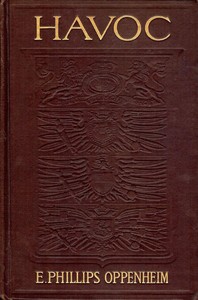
Havoc — book cover

Level C1 · pages · English

Havoc

Written by Oppenheim, E. Phillips (Edward Phillips)

"Havoc" by E. Phillips Oppenheim is a novel written during the early 20th century. The story begins amidst a tense political atmosphere in Europe, focusing on the interactions between a group of men—especially Bellamy, a spy, and Dorward, a journalist—who are observing a significant meeting between powerful leaders. The characters grapple with their emotions and responsibilities as they anticipate the dire consequences of these political maneuvers. The opening of the book sets the stage for an intricate web of espionage, betrayal, and personal conflict. It introduces us to Bellamy and Dorward, who are consumed by a sense of failure in uncovering the secrets of a crucial diplomatic meeting between the Czar and Austrian and German leaders. As their conversation unfolds, they hint at the looming threat of war and the unrest permeating Europe. Meanwhile, an important female character, Louise, enters the scene with her own motives and connections, adding layers to the narrative of intrigue and emotional struggle, hinting at a romantic subplot between her and Bellamy. The stage is rife with potential for twists and turns, positioning "Havoc" as a suspenseful tale of political tension and personal stakes.

Explore book
The Kingdom of the Blind — book cover

Level C1 · pages · English

The Kingdom of the Blind

Written by Oppenheim, E. Phillips (Edward Phillips)

"The Kingdom of the Blind" by E. Phillips Oppenheim is a novel likely written during the early 20th century. The story unfolds primarily in a high-society setting at the Ritz Hotel, focusing on characters involved in wartime dynamics as they navigate their personal relationships and intrigue amidst the backdrop of World War I. Central to the beginning of the narrative are Lady Anselman and her guests, including her wounded nephew Captain Ronald Granet whose return from the front is a point of interest, alongside other notable personalities like Surgeon-Major Thomson. The opening of the novel introduces Lady Anselman as she eagerly awaits her nephew's arrival at a luncheon gathering. The mix of guests, ranging from an actress to a Cabinet Minister, sets a lively tone that juxtaposes with the somber reality of war, particularly highlighted by Granet’s injuries. As conversations reveal the characters’ relationships and the social protocols of the time, the tension between them grows, particularly around the guests' feelings towards the war and each other. The interaction between Granet and Thomson hints at deeper connections—suggesting potential intrigue and conflict as they navigate their complex roles. This multi-layered social dynamic establishes the groundwork for a narrative rich in character development, suspense, and exploration of trust and loyalty during tumultuous times.

Explore book
The Malefactor — book cover

Level C1 · pages · English

The Malefactor

Written by Oppenheim, E. Phillips (Edward Phillips)

"The Malefactor" by E. Phillips Oppenheim is a novel written during the early 20th century. The book centers around the themes of personal redemption and societal scandal, exploring the complexities of morality, vengeance, and the human condition through the perspectives of two men: Lovell, who tells the story of another man’s downfall, and Sir Wingrave Seton, a man recently released from prison. Through these characters, the narrative probes the intricate relationships that arise from betrayal and the consequences of past actions. At the start of the novel, we are introduced to Lovell during a farewell gathering at a club as he prepares to depart for the Far East as a war correspondent. He recounts a tragic tale from his past about Sir Wingrave Seton, who was imprisoned for manslaughter tied to a scandal involving a love triangle. As Lovell shares the intricate details of Wingrave's story, we see the impact of Lady Ruth—the woman at the center of the scandal—on the lives of all involved. The opening effectively establishes the backdrop for a larger inquiry into justice, retribution, and the personal narratives that drive the characters' motivations, setting the tone for the intrigue that unfolds throughout the novel.

Explore book
The Vanished Messenger — book cover

Level C1 · pages · English

The Vanished Messenger

Written by Oppenheim, E. Phillips (Edward Phillips)

"The Vanished Messenger" by E. Phillips Oppenheim is a novel likely written during the early 20th century. The story unfolds primarily at the Liverpool Street Station in London, focusing on the chance encounter between two characters: Mr. John P. Dunster, a mysterious American with urgency in his demeanor, and a young man named Gerald Fentolin, who has just narrowly missed a critical train. The tension builds as they navigate the challenges posed by a fierce storm and a series of unfortunate events that delay their journeys, hinting at deeper intrigues at play. The opening of the book sets a suspenseful tone as it introduces a desolate platform with few travelers, creating an atmosphere ripe for plot development. As Dunster waits for a special train to Harwich, he meets Gerald, who is desperate to join him in order to avoid missing a golf tournament in The Hague. Their interaction reveals Dunster's cautious nature, as he is somewhat reluctant to assist Gerald, though he ultimately agrees. Shortly after their train departs, they are sidetracked due to dangerous weather conditions, culminating in a train accident. This incident not only connects their fates but also foreshadows the unfolding mystery and conflict yet to come in the narrative. The scene sets the stage for an exploration of themes like urgency, fate, and the ripple effects of seemingly simple decisions.

Explore book
The Yellow Crayon — book cover

Level C1 · pages · English

The Yellow Crayon

Written by Oppenheim, E. Phillips (Edward Phillips)

"The Yellow Crayon" by E. Phillips Oppenheim is a novel likely written in the early 20th century. The story introduces Mr. Sabin, a man of apparent prominence who is engulfed in a mysterious and troubling circumstance—the disappearance of his wife, the Duchess of Souspennier. The narrative unfolds with Mr. Sabin's internal turmoil and his determination to uncover the truth behind her absence, showcasing themes of love, deception, and the quest for justice. The opening of "The Yellow Crayon" sets the stage with a rich, languorous atmosphere, describing a beautiful summer day juxtaposed with Mr. Sabin's deep introspection and melancholy. After a prolonged period of contemplation in his lavish yet empty surroundings, he prompts his servant, Duson, to prepare for their imminent departure to New York, as he is set on locating his wife. The details of their flight lead to a hurried telegram to Felix, hinting at a connection to greater stakes. Exploring the immediate aftermath of his wife’s disappearance and Mr. Sabin's resolve, the beginning tantalizingly hints at both the personal stakes involved and the broader intrigues that await in the unfolding mystery.

Explore book
The Zeppelin’s Passenger — book cover

Level C1 · pages · English

The Zeppelin’s Passenger

Written by Oppenheim, E. Phillips (Edward Phillips)

"The Zeppelin's Passenger" by E. Phillips Oppenheim is a novel likely written in the early 20th century, set during World War I. The story begins with a group of characters, including Captain Griffiths and Helen Fairclough, discussing a mysterious Zeppelin incident, sparking a mixture of curiosity and concern. The narrative seems to center around themes of espionage, loyalty, and romantic entanglements against the backdrop of the war, particularly focusing on Helen and her fiancé, Major Felstead, who has been reported missing. The opening of the book takes place in a comfortable library where tea is being served to guests. The conversation reveals concern over a Zeppelin's observation car that has landed unexpectedly. The characters engage in light banter, yet an underlying tension is present due to the war and the fate of Major Felstead, who has been captured. Helen expresses anguish over her fiancé's situation, while Captain Griffiths appears to be harboring deeper, more personal feelings towards Helen. This mix of ordinary concerns and the strain of war sets the stage for a story intertwined with suspense and emotional depth as the narrative unfolds.

Explore book

Suggested age, readers, English difficulty and US school grade are separate labels. Age groups are guidance based on source information or editorial review; unreviewed books are “Not assessed”. A US grade is assigned only with source information or a documented assessment; otherwise it is “Not assessed”. Levels use A1–C2 to indicate reading difficulty. StoryWeaver levels 1/2/3/4 use our approximate A1/A2/B1/B2 guide, labelled “estimated”; this is not an official equivalence. A book-specific assessment takes priority. Other unassessed books are labelled “Not assessed”. Source StoryWeaver levels are retained separately. Classics retain their original English.

App tour

Captured app screens · English Book Reader AI & Learn

App screen

If you own rights to material on this website, or are authorized to represent the owner, send the details below. We review notices and can restrict or remove access. For follow-up or a counter-notice, include your reference or email [email protected].