
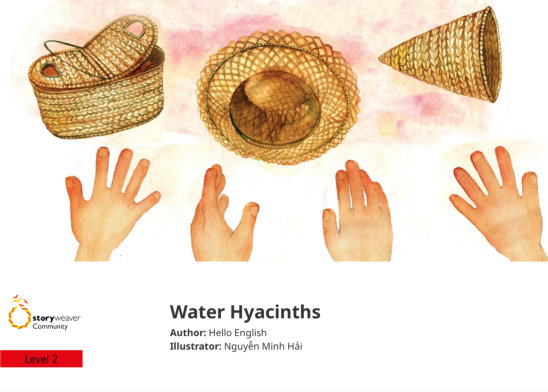
Water Hyacinths
Water hyacinths grow in hot and humid climates. Meera goes out on a boat with her mother on the river delta, to pick water hyacinths for cooking and weaving.
Library · Book category
Browse English books in Adventure. Age guidance and English difficulty are assessed separately.
Saved on this browser only. Book availability may change.
184 books
Reset filters
Water hyacinths grow in hot and humid climates. Meera goes out on a boat with her mother on the river delta, to pick water hyacinths for cooking and weaving.
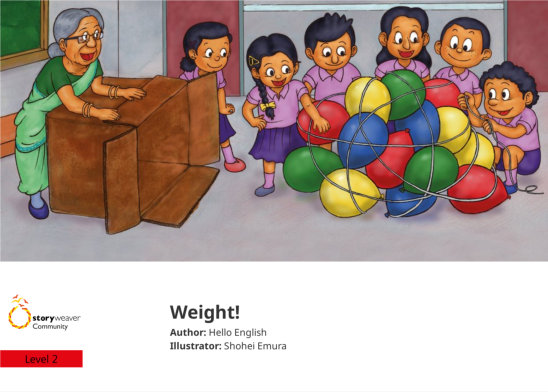
A girl learns how to balance weight, through games in school using balloons and scales.
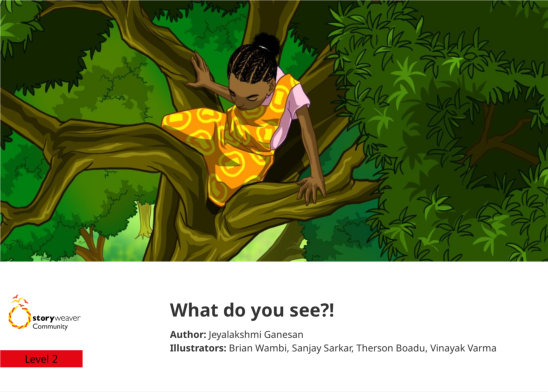
This is a poem about what can be seen from top of a tree.
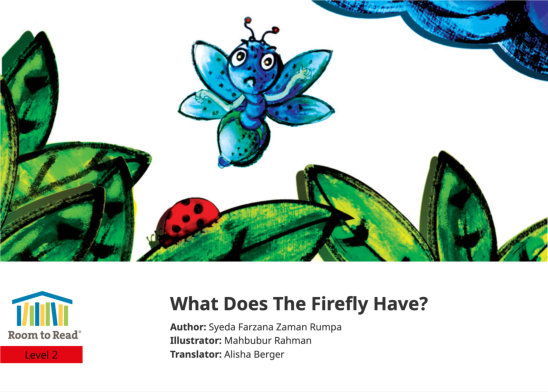
As she flies through the forest, a small firefly admires all the animals she passes by. The grasshopper in the green grass, the butterfly spreading out its wings, the weaver-bird swaying in its woven nest, and the spider swinging across the trees. The small firefly is envious. Why can’t she be as beautiful as the other animals? Can you help the firefly discover the beauty she brings to the forest?
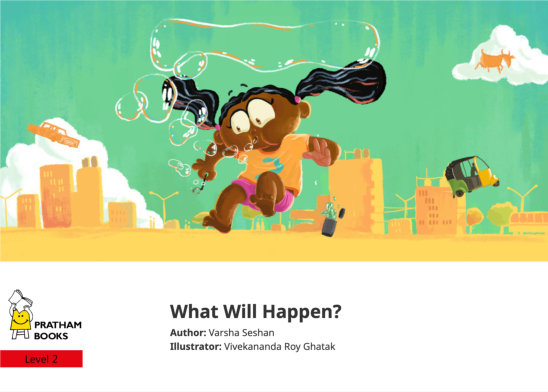
What will happen if Sunita presses her belly button? Or if she pulls her ears? A story about the power of imagination which also introduces children to different parts of the body.
PDF · Fixed page layoutIllustrations: not assessed
Categories: Adventure Crime, Thrillers & Mystery Fiction Humor Science-Fiction & Fantasy
Collection: Editor’s Picks
Readers: Kids
Suggested age: Not assessed
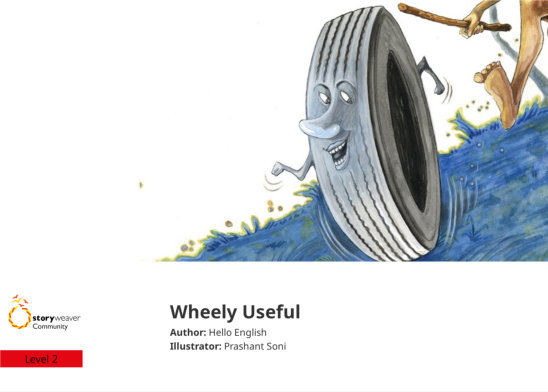
A tyre called Wheely comes off a truck and crashes. After leaving the truck, Wheely struggles to find a job where he is useful, until a boy comes along.
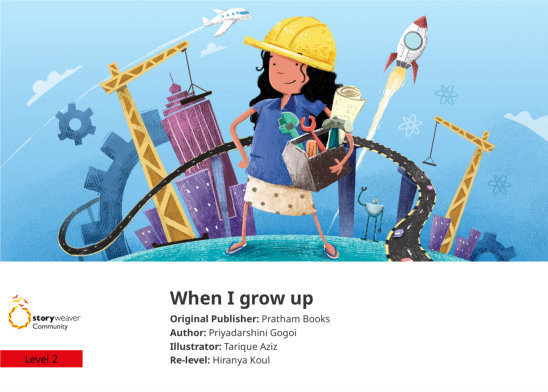
Here are some things built by engineers.
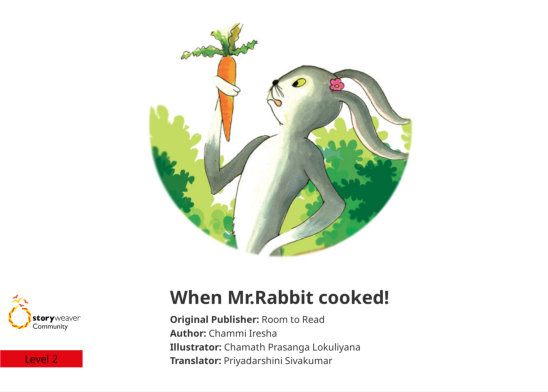
All of us get bored if we do the same thing repetitively. One would show some interest if there is something different to try. In this story, the rabbit also tries something different. What would the rabbit have done?
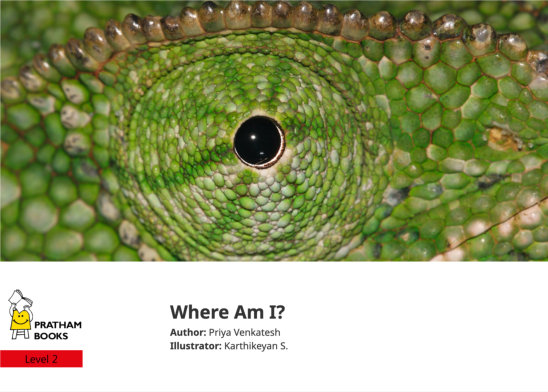
Insects and reptiles protect themselves by being able to hide in plain sight in their surroundings. A spotting book about camouflage.
PDF · Fixed page layoutIllustrations: not assessed
Categories: Adventure Crime, Thrillers & Mystery Nature/Gardening/Animals Science & Nature
Collection: Editor’s Picks
Readers: Kids
Suggested age: Not assessed
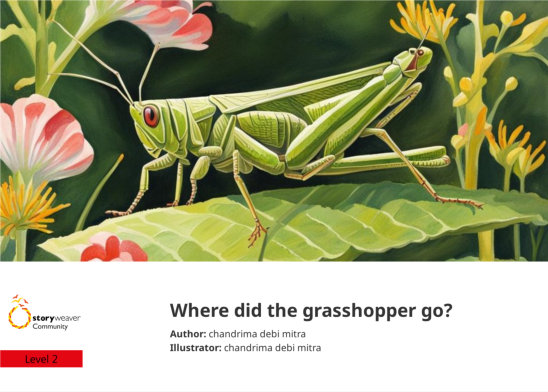
'Where did the grasshopper go?' is a heartwarming children's story that takes readers on a journey of discovery, as two little girls named Gauri and Radha go on a fun-filled exploration of insect behavior and the wonders of nature. The story encourages young readers to take a closer look at the world around them and appreciate the remarkable cycle of life that exists in their own backyard. By fostering an appreciation and understanding of nature, this heartwarming story leaves children with a sense of wonder and a desire to protect the precious ecosystems that surround them.
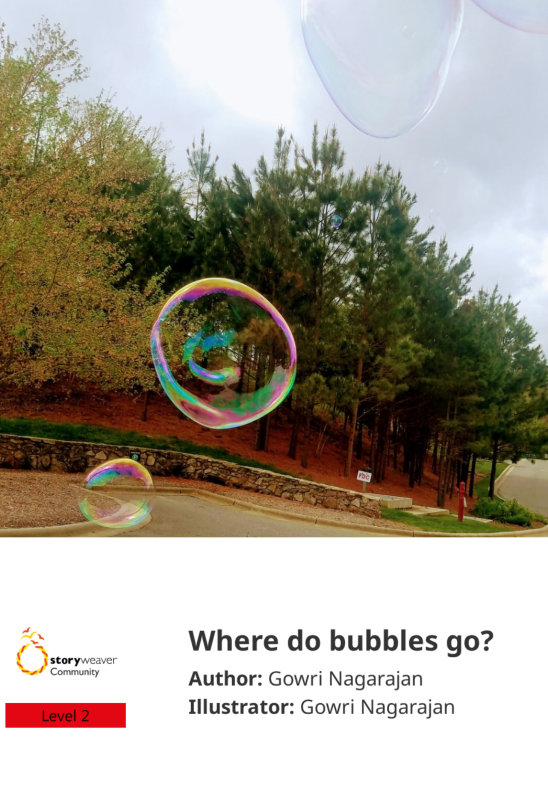
As a child, I have always been fascinated by Shel Silverstein's poem 'Where the Sidewalk Ends'. On the same vein, this story is an exploration of a child's imagination on where bubbles go. I dedicate this story to the endless imagination and curiosity inside every child.
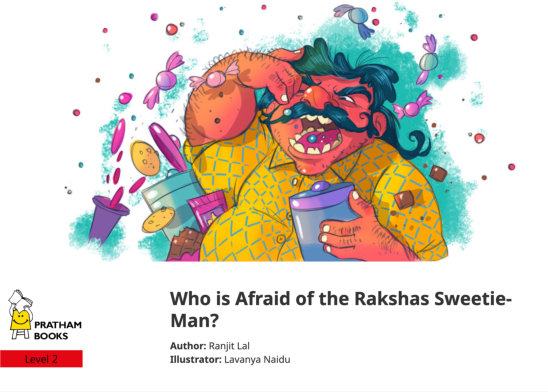
Samar and Nivya are terrified of the Rakshas Sweetie-Man. He looks scary, and oh, does he eat little puppies? When their six puppies run into the Rakshas Sweetie-Man’s shop, the twins must rescue them. But then they get the biggest surprise ever!
PDF · Fixed page layoutIllustrations: not assessed
Categories: Adventure Children & Young Adult Reading Crime, Thrillers & Mystery Family & Friends Fiction Human Interest Humor Nature/Gardening/Animals Personal Development
Collection: Editor’s Picks
Readers: Kids
Suggested age: Not assessed
Suggested age, readers, English difficulty and US school grade are separate labels. Age groups are guidance based on source information or editorial review; unreviewed books are “Not assessed”. A US grade is assigned only with source information or a documented assessment; otherwise it is “Not assessed”. Levels use A1–C2 to indicate reading difficulty. StoryWeaver levels 1/2/3/4 use our approximate A1/A2/B1/B2 guide, labelled “estimated”; this is not an official equivalence. A book-specific assessment takes priority. Other unassessed books are labelled “Not assessed”. Source StoryWeaver levels are retained separately. Classics retain their original English.