
A little reading, every day
Free English Books in PDF & EPUB
Read and download free English ebooks, from A1 picture stories to unabridged classics. Browse by English level, topic or format and keep the PDF, EPUB or TXT file.
English only
EPUB & PDF downloads
No account needed
A reading journey
Series & Collections
Follow connected stories in order, or find a collection and choose where to begin.
For young readers
Kids Books
Discover stories selected for children, for reading together or exploring independently.
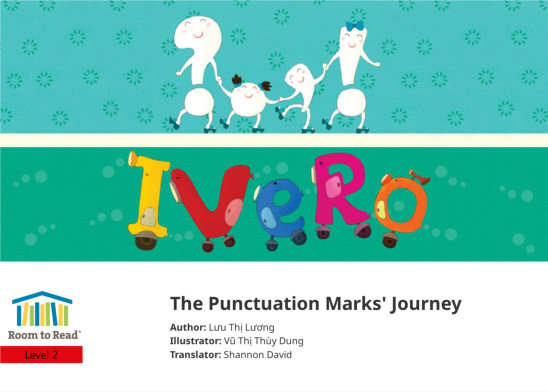
Saved on this browser only. Book availability may change. 3,949 books "The Princess De Montpensier" by Madame de La Fayette is a short novel published in 1662. Set during France's Wars of Religion, it tells the story of a young noblewoman married without love and caught between duty and desire. Surrounded by four men who want her—including her husband, his trusted friend, her former suitor, and a royal duke—she faces impossible choices in a society where reputation means everything. This pioneering work is considered one of the first modern French novels and a masterpiece of historical fiction. "The Princess of Cleves" by Madame de La Fayette is a French novel published in 1678. Set at the court of Henry II, it follows a young heiress who marries the Prince de Clèves but falls deeply in love with the Duke de Nemours. Torn between duty and passion, she confesses her forbidden feelings to her husband, triggering devastating consequences. This pioneering psychological novel explores inner emotions and moral struggle with remarkable depth, creating a timeless portrait of love, honor, and impossible choices. "The Prisoner of Zenda" by Anthony Hope is an adventure novel published in 1894. When the King of Ruritania is drugged before his coronation, an English tourist who happens to be his lookalike is persuaded to impersonate him. What begins as a temporary political solution becomes dangerous when the king is kidnapped. The Englishman must maintain his royal disguise while navigating palace intrigue, assassination attempts, and forbidden love with Princess Flavia—all while trying to rescue the real king from his captors. "The Private Papers of Henry Ryecroft" by George Gissing is a semi-fictional autobiographical work published in 1903. Gissing presents himself as the editor of a deceased friend's diary, organizing the reflections into four seasonal chapters. The work explores the narrator's love of nature and offers candid observations on society and politics. Written in an unaffected, classic style, the book gained particular popularity in Japan, where its seasonal structure and honest assessments resonated with early twentieth-century readers and scholars. The Problem Of Cell 13 by Jacques Futrelle. Source reading level: B2 Intermediate+. "The Professor" by Charlotte Brontë is a novel written in 1846 and published posthumously in 1857. William Crimsworth flees his oppressive brother's employment to reinvent himself as a teacher in Brussels. There, he navigates deception and hidden motives at two neighboring schools, where his headmistress conceals more than professional interest. When a promising pupil-teacher captures his attention, jealousy sets a scheme in motion that threatens their connection. This first-person narrative traces one man's pursuit of independence, love, and dignity in foreign territory. "The Profits of Religion: An Essay in Economic Interpretation" by Upton Sinclair is a critical analysis written in the early 20th century. This work examines religion from an economic perspective, arguing that it serves as both a source of income for clergy and a tool for maintaining social privilege and oppression. Sinclair uses evocative and satirical language to critique how institutionalized religion exploits its followers, connecting spiritual beliefs to financial gain and societal control. The opening of the book introduces the concept of "Bootstrap-lifting," a metaphor for how individuals labor under the illusion of spiritual elevation while being victimized by those who profit from their beliefs. Sinclair vividly describes a scene where people strain to lift themselves by their bootstraps, while a pickpocket reaps the rewards of their distraction. This introduces a series of critiques regarding various religious practices, asserting that many so-called spiritual exercises distract from the material realities of life and facilitate exploitation. Through these observations, Sinclair sets the stage for a broader examination of religious institutions as impediments to social progress, establishing a provocative foundation for his economic critique of culture. "The Project Gutenberg Encyclopedia, Volume 1 of 28" by Project Gutenberg is a historical reference work derived from a 1911 edition of a famous encyclopedia, likely compiled in the late 20th century as part of a digital project. This encyclopedia offers information on a vast array of subjects, reflecting knowledge and attitudes from the early 20th century, including topics ranging from ancient history to language, culture, and geography. At the start of this encyclopedia, readers are introduced to its structure and purpose, emphasizing that the content is drawn from older sources and is presented as a historical rather than contemporary reference. The initial entries focus on the historical development of various written languages, such as the Phoenician and Greek alphabets, and their evolution over time. This foundational context sets the tone for the subsequent wealth of articles that promise to explore a wide range of subjects, inviting readers to engage with the knowledge of the past through this accessible digital format. EPUB · Layout not assessedIllustrations: not assessed Categories: Encyclopedias/Dictionaries/Reference Suggested age: 14+ (AI estimate) Luna is terrified by a smoke cloud. Read on to find out what happens next... PDF · Fixed page layoutIllustrations: not assessed Categories: Human Interest Science & Nature Science-Fiction & Fantasy Readers: Kids Suggested age: Not assessed "The Provost" by John Galt is a novel written during the early 19th century. The book explores themes of governance, community, and self-interest through the life of its main character, Mr. Pawkie, who aspires to navigate the intricacies of local politics and societal expectations in the burgh of Gudetown. The opening of the novel introduces us to the widow of a former Provost, Mrs. Pawkie, who speaks highly of her deceased husband's manuscript, which contains notes on his public life as chief magistrate. After persuading her to publish the work, the narrative shifts to Mr. Pawkie, who recounts his ambitions and the prudent behaviors that enabled him to rise in status within his community. As he embarks on his journey through political life, we see him balancing the expectations of authority with the realities of human nature and societal norms, setting the stage for a rich exploration of character and ambition in a small town. The comma, the full stop, the exclamation point and the question mark all live together in a book. Is there enough room for all of them? "The Pupil" by Henry James is a short story first published in 1891. It tells the emotional tale of a precocious boy trapped in a dishonest, wandering American family in Europe. His only trustworthy companion is Pemberton, his impoverished Oxford-educated tutor. As their bond deepens, the boy's frail heart and desperate circumstances converge toward a moment of crisis. When opportunity for escape finally arrives, hesitation proves devastating. James crafts what critics call a classical tragedy exploring loyalty, moral courage, and the cost of inaction. Suggested age, readers, English difficulty and US school grade are separate labels. Age groups are guidance based on source information or editorial review; unreviewed books are “Not assessed”. A US grade is assigned only with source information or a documented assessment; otherwise it is “Not assessed”. Levels use A1–C2 to indicate reading difficulty. StoryWeaver levels 1/2/3/4 use our approximate A1/A2/B1/B2 guide, labelled “estimated”; this is not an official equivalence. A book-specific assessment takes priority. Other unassessed books are labelled “Not assessed”. Source StoryWeaver levels are retained separately. Classics retain their original English.
Want to read
The Princess De Montpensier
The Princess of Cleves
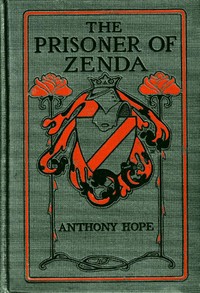
The prisoner of Zenda
The Private Papers of Henry Ryecroft
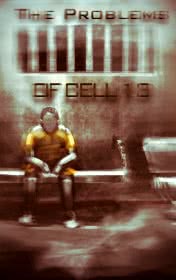
The Problem Of Cell 13
The Professor
The Profits of Religion: An Essay in Economic Interpretation
The Project Gutenberg Encyclopedia, Volume 1 of 28

The Proud Smoke Cloud
The Provost
The Punctuation Marks’ Journey
The Pupil
From a free ebook to your next reading habit.
These illustrated stories were created for children. Their short chapters and visual clues can also help English learners find an approachable place to start.
- Choose a story and download its PDF.
- Read it in your usual PDF reader, or save it to Files on your phone.
- In English Book Reader AI & Learn, open the import menu, choose Choose a PDF and select the saved file. You can then read, listen and explore English in context.
PDF downloads are free. App features and paid options are separate. Explore the app.
Shared with permission, credited with care.
This library includes openly licensed StoryWeaver stories and reviewed public-domain classics. Each book page explains its source, credits and reuse terms. Public-domain status depends on the country and exact edition. CC BY books require appropriate credit, the license link and an indication of changes.
Author, illustrator, publisher and original credits appear on each book page and inside the PDF. PDF formatting or safety changes are described on the book page. These books remain governed by their own license; app subscription terms do not restrict those rights. English Book Reader is an independent collection, with no endorsement by the original creators or StoryWeaver implied.
Have a question about a book or its credits? Contact us.