
A little reading, every day
Free English Books in PDF & EPUB
Read and download free English ebooks, from A1 picture stories to unabridged classics. Browse by English level, topic or format and keep the PDF, EPUB or TXT file.
English only
EPUB & PDF downloads
No account needed
A reading journey
Series & Collections
Follow connected stories in order, or find a collection and choose where to begin.
For young readers
Kids Books
Discover stories selected for children, for reading together or exploring independently.
Saved on this browser only. Book availability may change. 3,949 books "The Legends of the Jews — Volume 1" by Louis Ginzberg is a compilation published between 1909 and 1938. This monumental work gathers centuries of Jewish biblical legends from the Mishnah, Talmud, and Midrash into a chronological narrative. Volume 1 spans from Creation to Jacob, weaving together ancient oral traditions and folklore that expand upon the biblical text. Originally written in German and translated by Henrietta Szold, this scholarly yet accessible collection preserves Jewish storytelling traditions that answer questions the Bible leaves unspoken. I do not like that Uncle at all. He stares and tries to get too close to me. Look inside to know what I did. PDF · Fixed page layoutIllustrations: not assessed Categories: Family & Friends Poetry Collection: Editor’s Picks Readers: Kids Suggested age: Not assessed "The Lesson of the Master" by Henry James is a novel written in the late 19th century. The book explores themes of artistic ambition, social dynamics, and the complexities of relationships through the eyes of the young writer Paul Overt, as he navigates his first encounter with established literary figures, particularly the esteemed author Henry St. George. At the start of the novel, Paul is introduced as a young and aspiring writer visiting a lavish country estate. He is captivated by the surroundings, the high-profile guests, and especially the presence of St. George, whom he admires greatly. Throughout the opening scenes, we see Paul's nervousness and social awkwardness as he grapples with his feelings of inadequacy in the presence of literary giants. He observes the interactions among the party, including those of Mrs. St. George, who appears to be a complicated figure influencing her husband's career. As Paul becomes more entrenched in the social dynamics at play, particularly regarding Miss Fancourt, the General’s daughter, the opening sets the stage for a deeper exploration of literary ambition and personal relationships, foreshadowing the emotional and ethical dilemmas Paul will soon face. "The Letters of Robert Louis Stevenson — Volume 1" by Robert Louis Stevenson is a collection of personal letters written during the late 19th century. This volume takes readers into the life of Stevenson during his formative years, detailing his travels, family interactions, and observations of the world around him as he navigates through his adolescence and early adulthood. The opening of the collection presents a series of letters that reveal Stevenson's wit, humor, and keen observations of life. He writes to his mother and relatives about his experiences at school, his escapades with friends, and his reflections on the places he visits. From childhood whims about birthday cakes to insightful comments on the scenery while traveling, the letters capture his personality and the landscape of his thoughts. Through his playful language and candid emotions, readers glimpse the makings of a great writer as he shapes his understanding of life and relationships. "The Letters of Robert Louis Stevenson — Volume 2" by Robert Louis Stevenson is a collection of personal letters written during the late 19th century. This volume offers insights into Stevenson’s relationships with family and friends while documenting his thoughts, travels, and creative processes as he navigates life as a writer beset by health challenges. The opening of this volume reveals Stevenson’s correspondence from January 1886, when he resides in Bournemouth, to various friends and family members. Through his letters, we see Stevenson's affectionate yet humorously self-deprecating tone as he discusses mundane daily events, health woes, and his writing endeavors. He expresses deep sentiments toward the recipients, shares anecdotes, and reflects on his literary work, demonstrating a rich inner life intertwined with a genuine concern for those in his circle. This section captures both the warmth of his relationships and the struggles of a writer striving to reconcile creativity with personal adversity. "The Life and Opinions of Tristram Shandy, Gentleman" by Laurence Sterne is a humorous novel published from 1759 to 1767. The work purports to be a memoir, but narrator Tristram doesn't reach his own birth until the third volume. Through endless digressions, he recounts four accidents that doomed him to misfortune while depicting conflicts between his irritable father Walter and gentle Uncle Toby. The novel features sexual innuendo, unfinished sentences, and surprising visual elements including blank pages and censored paragraphs, transforming Sterne from obscure clergyman to literary celebrity. "The Life and Perambulations of a Mouse" by Dorothy Kilner is a children's novel written during the late 18th century. The story follows a mouse, referred to as Nimble, who narrates his adventures and misadventures in a world filled with human dangers and insights. The narrative mixes whimsical storytelling with moral lessons about obedience, the nature of fear, and the importance of kindness. The opening of the book introduces a winter gathering at Meadow Hall where various characters—including young people and a narrator—engage in storytelling to pass the time. The conversation soon shifts to sharing personal life stories, and amid this, a mouse unexpectedly asks the narrator to write its history. This charming interaction sets the stage for the mouse's journey, as it recounts its experiences in an environment hostile to its kind, illustrating lessons on courage, curiosity, and the consequences of fear. Through these tales, Kilner captures the delicate balance of peril and amusement experienced by the mouse, revealing its resilience and the challenges it faces in pursuit of survival and companionship. "The Life of Charlotte Brontë — Volume 1" by Elizabeth Cleghorn Gaskell is a biography published in 1857. Drawing on personal friendship, letters, and firsthand testimonies, Gaskell crafted an intimate portrait of the celebrated novelist that sparked immediate controversy. Complaints of slander forced the publisher to withdraw the first edition and issue censored versions within months. Despite its contested accuracy, this groundbreaking work transformed biographical writing, inspired enduring literary tourism to Yorkshire, and elevated the Brontë family to lasting cultural prominence. "The Life of Francis Marion" by William Gilmore Simms is a historical biography written in the mid-19th century. The book focuses on the life and exploits of Francis Marion, a prominent figure in South Carolina's Revolutionary War history, known for his strategic prowess and guerrilla warfare against British forces. Simms aims to illuminate Marion's contributions to the Southern campaign, often overshadowed by more prominent figures. The opening of the biography introduces us to the context of Marion's life, detailing his Huguenot ancestry and the severe hardships faced by early settlers in South Carolina. Simms paints a vivid picture of Marion's character and upbringing, emphasizing the influence of his surroundings and community—a blend of resilience and courage forged through adversity. The narrative transitions into Marion's early exploits, establishing him as a figure driven by patriotism and a sense of duty, which sets the stage for his later prominence in the revolutionary struggle. The book thus begins with an exploration of Marion’s roots and the historical backdrop that shaped his life and career. "The Life of General Francis Marion" by M. L. Weems is a historical account written in the early 19th century. This biography explores the life and contributions of Francis Marion, a key figure during the American Revolutionary War in the Southern states, particularly known for his guerrilla warfare tactics against British forces in South Carolina. The opening of the book introduces an earnest reflection by Weems on the historical accuracy of his narrative, acknowledging that while embellished, the account of Marion's valor is based on significant truths. It begins with insights into Marion's Huguenot ancestry, detailing the struggles his family faced before settling in Carolina. This leads to the story of his youthful romance with Louisa D'Aubrey, their bond strengthened by their shared challenges, which ultimately shapes Marion's character as a determined and selfless patriot ready to defend his country against tyranny. Throughout this introduction, the deep love and foundational values of Marion and Louisa are portrayed, setting a poignant stage for understanding Marion's later heroics in the struggle for American independence. "The Life of John Bunyan" by Edmund Venables is a historical account written in the late 19th century. This biography explores the life and significance of John Bunyan, the renowned author of "The Pilgrim's Progress," detailing his formative years, the socio-political backdrop of his time, and the various struggles he faced both personally and spiritually. It highlights Bunyan's journey from a seemingly inconsequential tinker in 17th century England to one of the most influential writers in the English literary canon. At the start of the book, the rich historical context surrounding Bunyan's birth is established, including the turbulent political climate of 1628 England, marked by tensions between the monarchy and Parliament. The early narrative gives insight into Bunyan’s humble beginnings in Elstow, Bedfordshire, detailing his family background and the societal standing of his parents. As the text unfolds, readers are introduced to Bunyan's childhood, characterized by a reckless youth filled with wild behavior that later transformed into spiritual turmoil and search for redemption. This opening lays the foundation for a deeper exploration of Bunyan's later spiritual awakening, his theologically charged conversion experiences, and the profound impact of his faith on his life and writings, setting the stage for a compelling portrait of a man who became a pivotal figure in religious literature. The Life of St. Declan of Ardmore is a hagiographic biography about St. Declan, an early Irish Christian saint credited with converting the Deisi people and spreading Christianity in the Decies region of Ireland. It recounts his lineage, miraculous deeds, church foundations, interactions with other saints, death, and lasting influence on the region. Suggested age, readers, English difficulty and US school grade are separate labels. Age groups are guidance based on source information or editorial review; unreviewed books are “Not assessed”. A US grade is assigned only with source information or a documented assessment; otherwise it is “Not assessed”. Levels use A1–C2 to indicate reading difficulty. StoryWeaver levels 1/2/3/4 use our approximate A1/A2/B1/B2 guide, labelled “estimated”; this is not an official equivalence. A book-specific assessment takes priority. Other unassessed books are labelled “Not assessed”. Source StoryWeaver levels are retained separately. Classics retain their original English.
Want to read

The Legends of the Jews — Volume 1
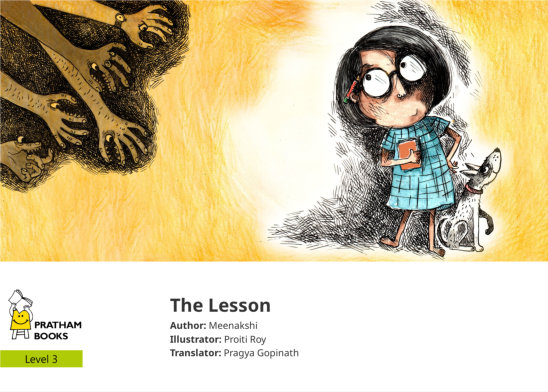
The Lesson
The Lesson of the Master
The Letters of Robert Louis Stevenson — Volume 1
The Letters of Robert Louis Stevenson — Volume 2

The life and opinions of Tristram Shandy, gentleman

The Life and Perambulations of a Mouse

The Life of Charlotte Brontë — Volume 1

The Life of Francis Marion

The Life of General Francis Marion

The Life of John Bunyan

The Life of St. Declan of Ardmore
From a free ebook to your next reading habit.
These illustrated stories were created for children. Their short chapters and visual clues can also help English learners find an approachable place to start.
- Choose a story and download its PDF.
- Read it in your usual PDF reader, or save it to Files on your phone.
- In English Book Reader AI & Learn, open the import menu, choose Choose a PDF and select the saved file. You can then read, listen and explore English in context.
PDF downloads are free. App features and paid options are separate. Explore the app.
Shared with permission, credited with care.
This library includes openly licensed StoryWeaver stories and reviewed public-domain classics. Each book page explains its source, credits and reuse terms. Public-domain status depends on the country and exact edition. CC BY books require appropriate credit, the license link and an indication of changes.
Author, illustrator, publisher and original credits appear on each book page and inside the PDF. PDF formatting or safety changes are described on the book page. These books remain governed by their own license; app subscription terms do not restrict those rights. English Book Reader is an independent collection, with no endorsement by the original creators or StoryWeaver implied.
Have a question about a book or its credits? Contact us.