
A little reading, every day
Free English Books in PDF & EPUB
Read and download free English ebooks, from A1 picture stories to unabridged classics. Browse by English level, topic or format and keep the PDF, EPUB or TXT file.
English only
EPUB & PDF downloads
No account needed
A reading journey
Series & Collections
Follow connected stories in order, or find a collection and choose where to begin.
For young readers
Kids Books
Discover stories selected for children, for reading together or exploring independently.
Saved on this browser only. Book availability may change. 3,949 books "Somebody's Luggage" by Charles Dickens is a collection of short stories written during the late 19th century. The narrative is initiated by an unnamed waiter who reflects humorously on his profession and the community of service workers. It sets the stage for a quirky exploration of social class and identity through the eyes of those who work at a coffee house, with special focus on the mystery surrounding an abandoned piece of luggage left at the establishment. The opening of the text presents us with a detailed portrait of the central character, a waiter, who comes from a lineage of waiters and possesses a unique worldview shaped by his experiences. He speaks of the luggage left behind by "Somebody," whom no one seems to remember or recognize, intertwining his reflections with anecdotes about his life as a waiter. This lingering curiosity about the owner of the luggage becomes the primary hook, promising a mix of humor, pathos, and revelation as it unfolds within the framework of everyday life in a bustling London establishment. Dickens effectively uses the waiter's narrative to delve into themes of social class, the ambiguity of identity, and the burdens of human connection. When Nandini and Kavitha go to the park, they find a lot of garbage lying around.
A duck has tried to eat a piece of plastic but now it is stuck around her beak.
Can the girls help save the duck and clean up the park for good?
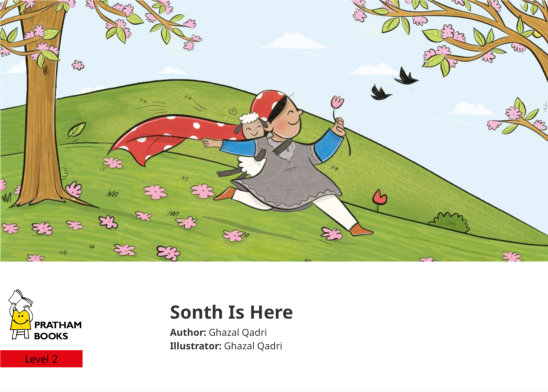
Read on to find out! PDF · Fixed page layoutIllustrations: not assessed Categories: Family & Friends Health & Wellbeing Human Interest Personal Development Science & Nature Collection: Editor’s Picks Readers: Kids Suggested age: Not assessed Sona loves to help everyone. In the first book, she helped her father. In the second book, she helped her mother. Now, Sona visits her uncle who makes ice-candies. What will she do there? PDF · Fixed page layoutIllustrations: not assessed Categories: Children & Young Adult Reading Family & Friends Humor Personal Development School & Education Collection: Editor’s Picks Readers: Kids Suggested age: Not assessed "Songs for Parents" by John Chipman Farrar is a collection of poems likely written in the early to mid-20th century. This book presents whimsical and playful verses, primarily aimed at children and their parents, covering themes of nature, childhood experiences, and family relationships. Through light-hearted imagery and lyrical language, Farrar captures the wonder of childhood and the joys of parenting. The poems in "Songs for Parents" are organized into several thematic sections, including "Songs of Desire," "Songs for Out of Doors," "Songs of Circumstance," and "Songs for a Christmas Tree." Each poem explores different aspects of childhood imagination and nature, showcasing children's innocent desires, their thoughts about the world around them, and experiences with family. For example, the poems reflect on the joy of being a carefree frog or the curious musings about where clouds go. The collection conveys a sense of nostalgia and tenderness, illuminating the delightful yet complex dynamics of growing up and parenthood through Farrar's charming and evocative verse. "Songs of Innocence and of Experience" by William Blake is a collection of illustrated poems combined in 1794. Blake hand-engraved, printed, and colored unique artwork to accompany each poem, exploring childhood innocence and experience as contrary states of the human soul. Originally published as separate volumes, the combined work shows pastoral harmony alongside subtle dangers of naiveté. Each page features distinctive illustrations that intensify the poems' meanings, making Blake's vision inseparable from both visual art and verse. The collection became a hallmark of Romanticism and has inspired countless musical adaptations. "Songs, Merry and Sad" by John Charles McNeill is a collection of poems written in the early 20th century, specifically during the early 1900s. The book encapsulates various themes of love, nature, and the human experience, often contrasting joyous and sorrowful moments. McNeill, a North Carolina poet, captures the essence of Southern life and sentiment through a rich tapestry of lyrical verses that reflect both personal and universal emotions. The collection comprises over sixty poems, each painted with vivid imagery and deep emotional resonance. Among the highlights is "The Bride," which explores the delicate balance of joy and nostalgia felt by a new bride, while "Home Songs" recalls the comforts of family and familiar landscapes. Other poignant pieces, such as "To Melvin Gardner: Suicide," delve into themes of loss and despair. McNeill's ability to weave the Merry and the Sad showcases his profound understanding of life's dualities, making it a reflective and evocative read for anyone interested in poetic expressions of the human condition. "Sonnets on Sundry Notes of Music" by William Shakespeare is a collection of poetic works that blends themes of love and nature through enchanting lyricism. Written during the late 16th to early 17th century, this book captures the essence of the Elizabethan era, where poetry was a popular form of expression, particularly regarding the complexities of human emotions. The likely topic of the book revolves around the interplay of love, desire, and the beauty of nature, illustrated through a series of sonnets. The content of the collection features a variety of sonnets that explore different facets of love, from its joys to its heartbreaks. In the poems, Shakespeare personifies emotions and presents vivid imagery of idyllic pastoral scenes, often contrasting the beauty of nature with the pain of love unrequited or lost. The speaker laments the fickleness of fortune and reflects on the nature of true friendship, contemplating how relationships can shift with changing circumstances. In essence, the collection serves as an evocative meditation on love's complications, delivered through Shakespeare's masterful command of language and rhythm. "Sons and Lovers" by D. H. Lawrence is a novel published in 1913. It follows Paul Morel, a young man caught between his demanding mother's overpowering love and his relationships with two contrasting women. These suffocating bonds create deep emotional conflicts that shape his struggle toward manhood. Lawrence explores the psychological damage of maternal possession as Paul fights to claim his own life and capacity for love, ultimately facing the question of whether he can break free from the ties of blood that bind him. "Sons of the Soil" by Honoré de Balzac is a novel written during the mid-19th century that explores the lives of the rural proletariat in France. The opening chapters immediately delve into the complexities of peasant life against the backdrop of a society grappling with class distinctions and the lingering effects of the Revolution. Central to the early narrative is the picturesque yet contested estate of Les Aigues, and the characters that inhabit its world, including the astute and aging Pere Fourchon and his grandson Mouche, who represent the struggles and intricate dynamics of agrarian life. The beginning of the novel sets a vivid scene with a detailed description of the scenic estate of Les Aigues, embodying both the beauty of the landscape and the social tensions within. The narrator recounts a letter addressed to a friend, bringing to life the grandeur of the chateau while also hinting at the underlying animosities between the landowners and the peasantry. As characters like General Montcornet and the crafty Tonsard family are introduced, readers are drawn into a web of relationships marked by deception, survival, and the stark realities of rural existence, foreshadowing the central conflicts surrounding land, class, and power that will be explored throughout this rich narrative. Ghazal loves winter and snow but when spring arrives in the valley of Kashmir, so do colour, music and the sun. A joyous celebration of everything the season of spring, Sonth, evokes. PDF · Fixed page layoutIllustrations: not assessed Categories: Family & Friends Human Interest Science & Nature Collection: Editor’s Picks Readers: Kids Suggested age: Not assessed "Sophist" by Plato is a philosophical dialogue written around 360 BC. Led by the mysterious Eleatic Stranger, the dialogue pursues a challenging question: what distinguishes a sophist from a philosopher? Through an intricate method of collection and division, the interlocutors systematically classify forms of knowledge and expertise, building elaborate taxonomies to corner their elusive quarry. The dialogue explores deep questions about language, reality, and definition while Socrates—unusually—remains silent in the background. The story is about an adventure-seeking girl who learns a valuable lesson - to love and respect our parents, and to always tell the truth and listen to them! Suggested age, readers, English difficulty and US school grade are separate labels. Age groups are guidance based on source information or editorial review; unreviewed books are “Not assessed”. A US grade is assigned only with source information or a documented assessment; otherwise it is “Not assessed”. Levels use A1–C2 to indicate reading difficulty. StoryWeaver levels 1/2/3/4 use our approximate A1/A2/B1/B2 guide, labelled “estimated”; this is not an official equivalence. A book-specific assessment takes priority. Other unassessed books are labelled “Not assessed”. Source StoryWeaver levels are retained separately. Classics retain their original English.
Want to read

Somebody’s Luggage
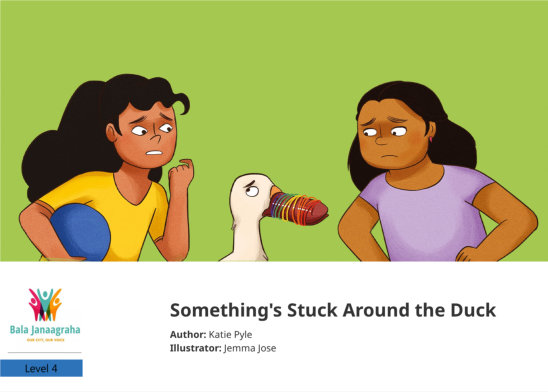
Something’s Stuck Around the Duck
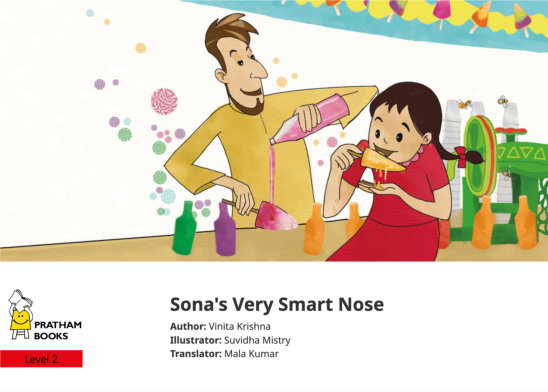
Sona’s Very Smart Nose

Songs for Parents
Songs of Innocence and of Experience

Songs, Merry and Sad
Sonnets on Sundry Notes of Music
Sons and Lovers
Sons of the Soil
Sonth Is Here
Sophist
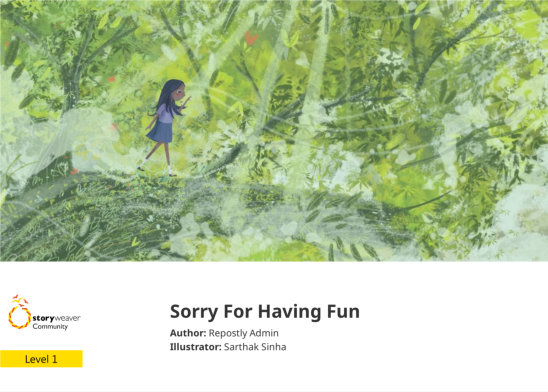
Sorry For Having Fun
From a free ebook to your next reading habit.
These illustrated stories were created for children. Their short chapters and visual clues can also help English learners find an approachable place to start.
- Choose a story and download its PDF.
- Read it in your usual PDF reader, or save it to Files on your phone.
- In English Book Reader AI & Learn, open the import menu, choose Choose a PDF and select the saved file. You can then read, listen and explore English in context.
PDF downloads are free. App features and paid options are separate. Explore the app.
Shared with permission, credited with care.
This library includes openly licensed StoryWeaver stories and reviewed public-domain classics. Each book page explains its source, credits and reuse terms. Public-domain status depends on the country and exact edition. CC BY books require appropriate credit, the license link and an indication of changes.
Author, illustrator, publisher and original credits appear on each book page and inside the PDF. PDF formatting or safety changes are described on the book page. These books remain governed by their own license; app subscription terms do not restrict those rights. English Book Reader is an independent collection, with no endorsement by the original creators or StoryWeaver implied.
Have a question about a book or its credits? Contact us.