
A little reading, every day
Free English Books in PDF & EPUB
Read and download free English ebooks, from A1 picture stories to unabridged classics. Browse by English level, topic or format and keep the PDF, EPUB or TXT file.
English only
EPUB & PDF downloads
No account needed
A reading journey
Series & Collections
Follow connected stories in order, or find a collection and choose where to begin.
For young readers
Kids Books
Discover stories selected for children, for reading together or exploring independently.
Saved on this browser only. Book availability may change. 3,949 books This is the continuation of the first book. In this, along with the describing the natural beauty of India, I have also given some pictures of the temples and asked them to identify it which makes students easier to understand about the significance of building temples in Indian culture. "Indian Boyhood" by Charles A. Eastman is a memoir exploring the author’s childhood experiences as a Dakota Sioux boy, likely written in the early 20th century. The book delves into Eastman's early life, cultural traditions, and the upbringing he received from his family, particularly from his grandmother, in a society that is in a constant struggle with the encroachment of Western civilization. The opening of the memoir provides a vivid and personal account of Eastman's infancy and early childhood, establishing the backdrop of his upbringing in a Sioux community. He introduces himself through the name "Hakadah," meaning "the pitiful last," given to him after the death of his mother. The narrative features the love and care he received from his grandmother, who played a substantial role in his education and cultural transmission. It also describes elements of Sioux life, including hunting, games, and the strong connections to nature that were integral parts of his formative experiences. As Eastman recounts these formative events and lessons from his early years, he highlights the values instilled in him, such as bravery, observation skills, and respect for nature and family traditions, effectively setting the stage for a deeper exploration of his identity and heritage throughout the memoir. "Indian Heroes and Great Chieftains" by Charles A. Eastman is a historical account written in the late 19th century. The book focuses on the lives and stories of influential Sioux leaders and warriors, such as Red Cloud, Crazy Horse, and Sitting Bull, highlighting their character, struggles, and significance within Native American history. Eastman, himself a member of the Sioux, aims to shed light on these figures who were often misunderstood or misrepresented in American history, providing them the justice and recognition they deserve. The opening of the book introduces key historical figures starting with Red Cloud, depicting his early life, upbringing, and transformation into a revered leader amidst turbulent times for the Sioux. Read Cloud’s character is marked by resilience, bravery, and a commitment to his people's way of life, revealing anecdotes that illustrate his dedication to leadership and his people. The narrative sets a stage that reflects the broader context of the Sioux's struggle against encroachment by settlers and the U.S. government, emphasizing themes of honor, cultural pride, and the vital importance of tribal unity in the face of adversity. "Indian Why Stories: Sparks from War Eagle's Lodge-Fire" by Frank Bird Linderman is a collection of Native American folktales that was likely written in the early 20th century. The book draws inspiration from the rich oral traditions of various tribes, particularly the Blackfeet, Chippewa, and Cree, through the storytelling lens of War Eagle, a character embodying the wisdom and culture of Native American heritage. The stories often explain the origins of animals and nature, conveying moral lessons and cultural values through entertaining narratives. At the start of the book, the narrator joins War Eagle as he tells engaging tales to his grandchildren, setting a cozy and intimate scene. Among the early stories recounted is one about Old-man, a trickster figure, who is responsible for both creation and mischief. The tale of how the Chipmunk got its stripes is a humorous account of Old-man's antics, including his interactions with other animals and his clever, albeit mischievous, solutions to challenges. As War Eagle narrates, the children listen eagerly, reflecting the timeless nature of storytelling as a means of cultural transmission within the community. The blend of mythology, humor, and valuable life lessons makes the opening portion inviting and engaging for readers of all ages. EPUB · Layout not assessedPDF · Fixed page layoutIllustrations: not assessed Categories: Children & Young Adult Reading Mythology, Legends & Folklore Readers: Adults Family Kids Teens Suggested age: 8+ (AI estimate) “Initials Only” by Anna Katharine Green is a detective novel written in the late 19th century. The story revolves around the mysterious death of a prominent young woman, Miss Challoner, which initially appears to be a sudden health failure, but the subsequent investigation leads to suspicions of foul play. The narrative follows several characters including the curious couple, George and Laura Anderson, who become entangled in the unfolding mystery, particularly as they witness odd behavior from a man who may be connected to the case. At the start of the novel, the Andersons find themselves in a crowded street near a hotel when they notice a man washing his hands in the snow—a behavior that piques their curiosity. Shortly after, they hear commotion from the hotel indicating a tragedy has occurred. They learn that Miss Challoner has suddenly died in the hotel, and as George becomes involved in the investigation, the couple is determined to uncover the truth behind her death. The opening sets the stage for the complex interplay of characters and clues that will dominate the narrative as they venture deeper into the mystery of the young woman's unfortunate demise, emphasizing themes of curiosity, societal intrigue, and the darker aspects of human nature. Flying food, crawling food, hopping food – no food is too crazy for Inku! Join Inku on her food adventures as she meets other creatures of the forest. PDF · Fixed page layoutIllustrations: not assessed Categories: Engineering & Technology Family & Friends Nature/Gardening/Animals Science & Nature Collection: Editor’s Picks Readers: Kids Suggested age: Not assessed The story talks about how a young girl, Anu realises something very fundamental about the universe in her dream. PDF · Fixed page layoutIllustrations: not assessed Categories: Engineering & Technology Science & Nature STEM Readers: Kids Suggested age: Not assessed Know how to send an email? Of COURSE! Then you know what the internet is, don't you? Umm... sort of. And you know what www means, right? Wellll... kind of. You are feeling a little silly right now, aren't you? Mmmm. Never fear, Nettikutti is here! Gather round to listen as our bright little friend unravels the magic and mystery of the ginormous digital brain called the world wide web. PDF · Fixed page layoutIllustrations: not assessed Categories: Engineering & Technology Non-fiction Science & Nature STEM Readers: Kids Suggested age: Not assessed The story is written in rhymes and introduces the concept of body parts present inside the body. Children are familiar with the body parts they can see. This book will help explain about the ones that they cannot! Use gestures and mimes as you sing along with them. PDF · Fixed page layoutIllustrations: not assessed Categories: Children & Young Adult Reading Poetry Science & Nature Readers: Kids Suggested age: Not assessed "Intentions" by Oscar Wilde is a collection of essays written in the late 19th century that delves into themes of art, morality, and aesthetics. The opening piece, "The Decay of Lying," is structured as a dialogue between two characters, Cyril and Vivian, who engage in a witty and philosophical examination of the nature of lying in art and literature. Wilde’s exploration indicates a belief in the transformative and essential role of art in society, while suggesting that modern realism diminishes creativity and beauty. The opening of "Intentions" presents a lively discussion between Cyril, who urges appreciation for nature, and Vivian, who dismisses it in favor of the comforts and creativity found indoors. Vivian argues that the decline of lying as an art form has led to the uninspired nature of contemporary literature, contending that art should reflect imagination rather than the mundane realities of life. Through sharp and humorous exchanges, Wilde sets the stage for a deeper critique of the societal values surrounding truth and beauty, ultimately championing the importance of artistic imagination over factual representation. This sets a thought-provoking tone for the essays that follow, inviting readers to reconsider their own understanding of art and its relationship with lies. A smelly monster that cannot be seen. PDF · Fixed page layoutIllustrations: not assessed Categories: Engineering & Technology Family & Friends Science & Nature STEM Readers: Kids Suggested age: Not assessed "Ion" by Plato is a dialogue written in ancient Greece. In this short work, Socrates questions Ion, a professional rhapsode who performs and lectures on Homer's poetry. Their conversation explores a provocative question: does Ion's skill come from genuine knowledge and artistic technique, or from divine possession? Through pointed questioning, Socrates challenges Ion's claims of expertise, suggesting that poets and their performers may be inspired vessels of the gods rather than masters of craft—a conclusion the rhapsode resists accepting. Suggested age, readers, English difficulty and US school grade are separate labels. Age groups are guidance based on source information or editorial review; unreviewed books are “Not assessed”. A US grade is assigned only with source information or a documented assessment; otherwise it is “Not assessed”. Levels use A1–C2 to indicate reading difficulty. StoryWeaver levels 1/2/3/4 use our approximate A1/A2/B1/B2 guide, labelled “estimated”; this is not an official equivalence. A book-specific assessment takes priority. Other unassessed books are labelled “Not assessed”. Source StoryWeaver levels are retained separately. Classics retain their original English.
Want to read

India: An Incredible country (Part – 2)
Indian Boyhood
Indian Heroes and Great Chieftains
Indian Why Stories: Sparks from War Eagle’s Lodge-Fire
Initials Only
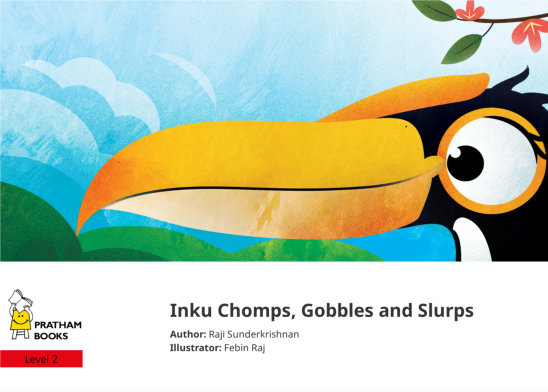
Inku Chomps, Gobbles and Slurps
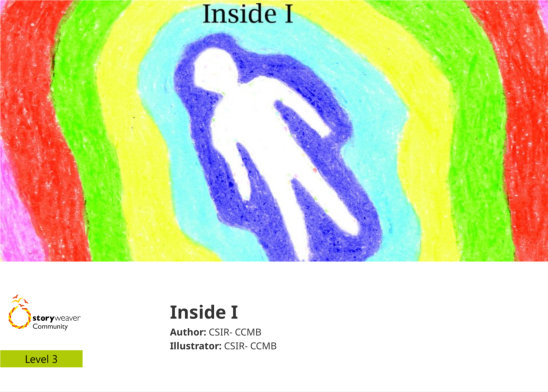
Inside I
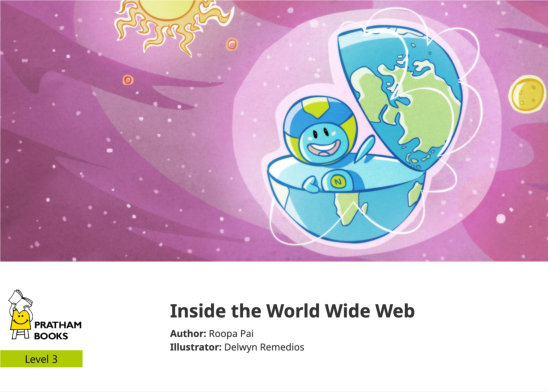
Inside the World Wide Web
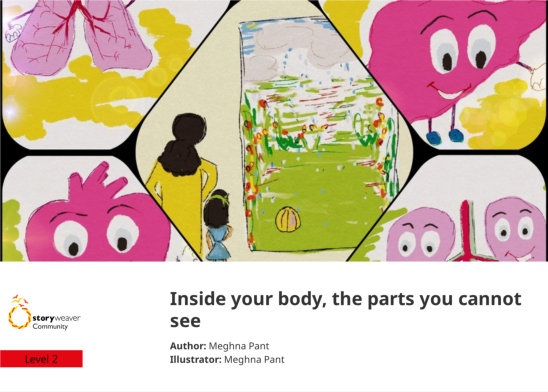
Inside your body, the parts you cannot see
Intentions
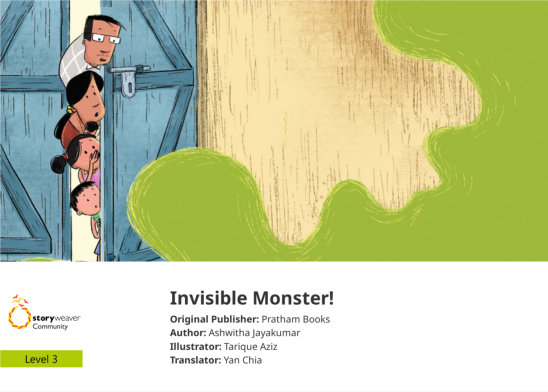
Invisible Monster!
Ion
From a free ebook to your next reading habit.
These illustrated stories were created for children. Their short chapters and visual clues can also help English learners find an approachable place to start.
- Choose a story and download its PDF.
- Read it in your usual PDF reader, or save it to Files on your phone.
- In English Book Reader AI & Learn, open the import menu, choose Choose a PDF and select the saved file. You can then read, listen and explore English in context.
PDF downloads are free. App features and paid options are separate. Explore the app.
Shared with permission, credited with care.
This library includes openly licensed StoryWeaver stories and reviewed public-domain classics. Each book page explains its source, credits and reuse terms. Public-domain status depends on the country and exact edition. CC BY books require appropriate credit, the license link and an indication of changes.
Author, illustrator, publisher and original credits appear on each book page and inside the PDF. PDF formatting or safety changes are described on the book page. These books remain governed by their own license; app subscription terms do not restrict those rights. English Book Reader is an independent collection, with no endorsement by the original creators or StoryWeaver implied.
Have a question about a book or its credits? Contact us.