Free English ebook
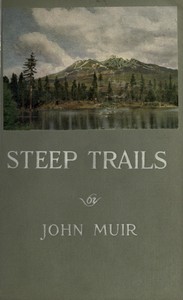
Steep Trails
"Steep Trails" by John Muir is a collection of essays that captures the author's personal experiences and observations of the natural world, likely written in the late 19th century. This work highlights Muir's deep appreciation for the wilderness, showcasing his adventures across various western landscapes such as California, Utah, Nevada, and the Grand Canyon, while reflecting on the beauty and challenges of nature. The opening of "Steep Trails" introduces Muir's thoughts on the significance of nature and wildness, contrasting it with human culture and cultivation. He recounts his examination of wild sheep and their superior wool, using this observation as a metaphor for the broader idea that nature’s creations exist for their own purposes rather than for human use. Muir critiques humanity's tendency to impose cultivation onto nature, arguing that true beauty and utility lie in wildness. Through rich descriptions and philosophical musings, Muir paints a vivid picture of his interactions with the natural landscape, establishing a foundation for the themes of exploration and reverence for the wilderness that permeate the rest of the collection.
Level C1 pagesEnglish
No reads counted yet
Categories: Essays, Letters & Speeches Nature/Gardening/Animals Travel Writing
Suggested age: 13+ (AI estimate)
EPUB · Layout not assessedPDF · Fixed page layoutIllustrations: not assessed
Saved on this browser only.
About this book
"Steep Trails" by John Muir is a collection of essays that captures the author's personal experiences and observations of the natural world, likely written in the late 19th century. This work highlights Muir's deep appreciation for the wilderness, showcasing his adventures across various western landscapes such as California, Utah, Nevada, and the Grand Canyon, while reflecting on the beauty and challenges of nature. The opening of "Steep Trails" introduces Muir's thoughts on the significance of nature and wildness, contrasting it with human culture and cultivation. He recounts his examination of wild sheep and their superior wool, using this observation as a metaphor for the broader idea that nature’s creations exist for their own purposes rather than for human use. Muir critiques humanity's tendency to impose cultivation onto nature, arguing that true beauty and utility lie in wildness. Through rich descriptions and philosophical musings, Muir paints a vivid picture of his interactions with the natural landscape, establishing a foundation for the themes of exploration and reverence for the wilderness that permeate the rest of the collection.
Reading guidance
Level C1Language difficulty is an AI estimate based on sampled text.
Reader and content guidance is an AI estimate based on the title, author, source summary, contents and selected excerpts. Unseen portions have not been assessed.
Recommended age: 13+ (AI estimate)
Content in samples is clean nature writing, but dense 19th-century expository prose and geological and agricultural concepts suit independent teen reading; younger readers would likely need supported reading. Based on named-book metadata and selected excerpts; unseen text was not assessed. This is guidance, not an official age rating; individual reading ability varies.
Source: Project Gutenberg · Public domain in the USA.
Report a file or book information problemReport a copyright concern about this book